← 2026-11-04 edition · Sourced reporting
Tripling climate-adaptation finance could still cover under a third of estimated need, UN reports.
As of 2026-11-04 · Publication details
2035 conditional scenario · tripling aspiration achieved · as reported November 4, 2026 · percent of estimated adaptation needs met
Assumes the 2035 tripling aspiration is achieved. Attributed estimates, not observed payments or a forecast. Scale is 0–29%, NOT a 100% track; the longer bar still represents only 29% of estimated need.
Read the values and scale as a table
| Measure | Value (percent of estimated adaptation needs met) | Evidence |
|---|---|---|
| Lower coverage estimate · conditional | 20 | [1] |
| Upper coverage estimate · conditional | 29 | [1] |
Developing countries; the report account’s conditional 2035 scenario, published by UN News November 4, 2026. The underlying model was not captured or independently reproduced.
UN News reports that even achieving the aspiration to triple annual adaptation support by 2035 would cover only 20–29 percent of estimated needs after inflation. Those are the report’s conditional estimates, not observed funding or a forecast. The underlying model was not captured, so this newsroom has not independently reproduced the percentages. [1]
Still open: The original UNEP report and underlying model/price assumptions were not captured through an approved adapter. The 20–29 percent range remains attributed to UN News’s original account. All open questions ↓
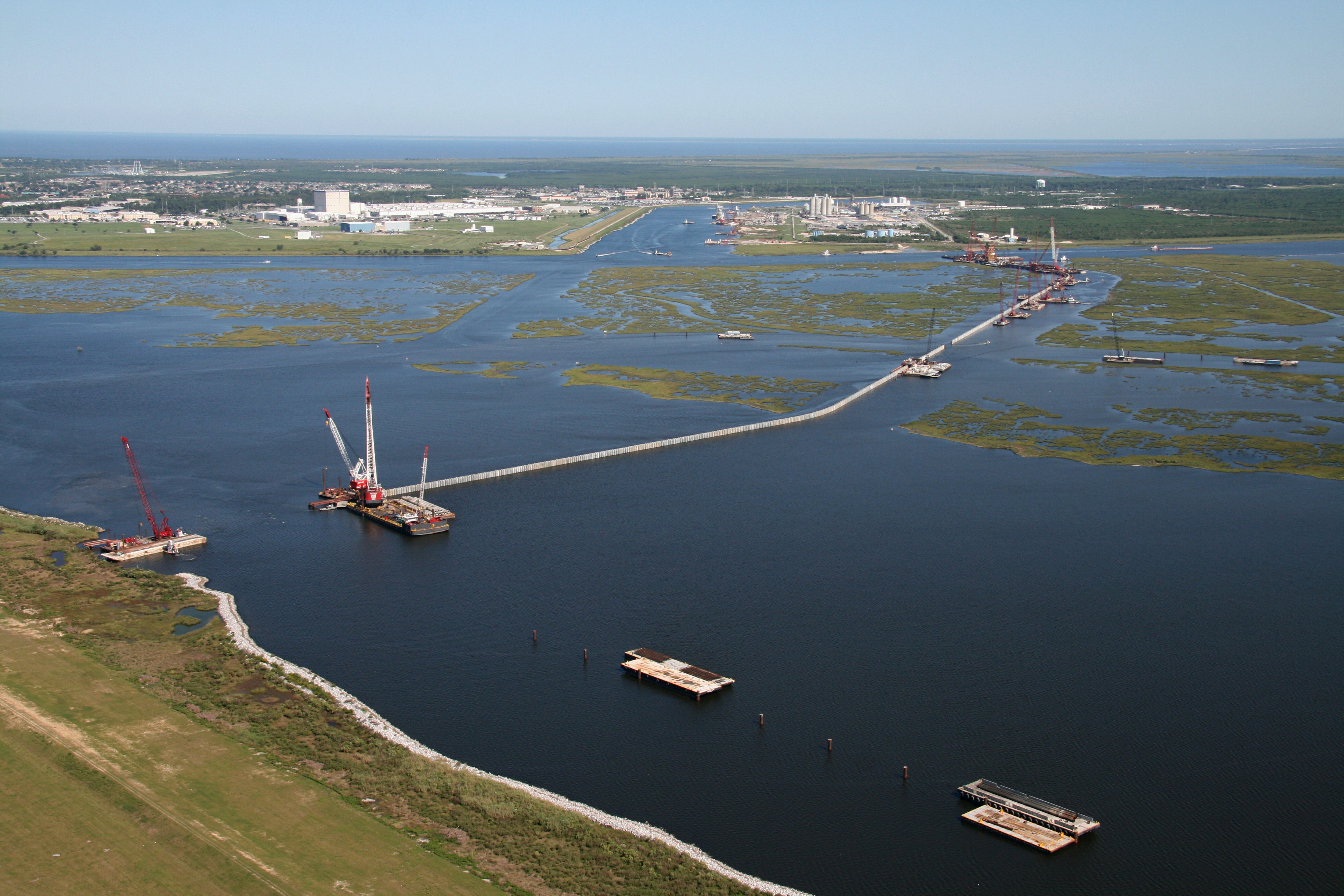
U.S. readers preparing locally: the National Weather Service’s Before a Flood guide covers communications planning, emergency kits and flood-risk checks. It is U.S. household guidance, not a developing-country adaptation-funding application or evidence of finance delivered. →Archive photograph · 2009-09-30 · Inner Harbor Navigation Canal/Lake Borgne surge-barrier construction, eastern New Orleans, Louisiana, United States

Read the full story
The reporting question: Why would a larger climate-adaptation funding target still leave a large gap?
A target is not a payment
The tripling aspiration concerns annual support by 2035. The visual shows the report account’s estimated coverage if that aspiration is achieved. It does not show money already delivered or the share of households protected. The underlying model and its inflation assumptions remain unavailable in this worker’s captured evidence. [1]
Keep the clocks and price bases separate
The same account reports $28.2–$31.7 billion in 2024 international public adaptation finance. That historical range cannot simply be subtracted from a future-needs estimate on a different price basis. It also notes that development-bank financing likely rose in 2025, so the evidence does not support a claim that every funding source is shrinking. [2] [4] [1]
Implementation matters as well as money
The report account identifies institutional barriers and says finance alone is not enough. Neither a target nor an approved budget establishes completed protection. This story does not estimate an individual project’s benefit or promise a future disaster outcome. [3] [1]
A separate U.S. preparedness resource
For U.S. household preparation, the National Weather Service’s Before a Flood guide covers a communications plan, an emergency kit and knowing flood risk. This guidance does not establish developing-country funding or protection delivered by a project. [5]
- 2 source records
- Original reporting
- United Nations News
- National Weather Service, NOAA
How we know5 scoped claims · 2 source recordsView evidence
Each claim keeps its full assertion, date, source passage and limits. Source counts describe records, not independent corroboration.
1.Claim 1Attributed
UN News reports that achieving the aspiration to triple annual adaptation finance by 2035 would cover 20–29 percent of estimated needs after inflation.
- Scope
- November 4, 2026 UN News account of UNEP’s 2026 Adaptation Gap Report. The graphic is a reported conditional 2035 funding-coverage scenario for developing countries, not money received, observed protection or a forecast verified by this newsroom.
- Evidence passage
- Intensify efforts section, projected-funding and inflation paragraph.
- As of
- 2026-11-04
- Limit
- Conditional estimate attributed to the report account. The underlying model, baseline and price assumptions were not captured or independently recalculated.
Retrieved 2026-11-04T16:14:16.099Z · United Nations News
Captured visible original record at the stated scope. The original UNEP report and underlying model/price assumptions were not captured through an approved adapter. The 20–29 percent range remains attributed to UN News’s original account. No project-level cash receipts, local protection outcomes or independent finance audit were obtained. UN News and UNEP are an institutional source trail, not two independent confirmations. Ground-level Bangladesh flood photographs and a satellite alternative could not be acquired with usable original rights/date receipts or returned HTTP 429. The selected U.S. construction archive illustrates physical protective work, outside the developing-country finance population.
2.Claim 2Attributed
The UN account puts 2024 international public adaptation-finance flows at $28.2–$31.7 billion, around $1 billion more than the previous year.
- Scope
- November 4, 2026 UN News account of UNEP’s 2026 Adaptation Gap Report. The graphic is a reported conditional 2035 funding-coverage scenario for developing countries, not money received, observed protection or a forecast verified by this newsroom.
- Evidence passage
- Adaptation finance growth stalls section, historical flow range.
- As of
- 2026-11-04
- Limit
- Observed-period estimate reported by UN News; not the same period or price basis as future needs. Do not subtract it directly from a 2035 estimate.
Retrieved 2026-11-04T16:14:16.099Z · United Nations News
Captured visible original record at the stated scope. The original UNEP report and underlying model/price assumptions were not captured through an approved adapter. The 20–29 percent range remains attributed to UN News’s original account. No project-level cash receipts, local protection outcomes or independent finance audit were obtained. UN News and UNEP are an institutional source trail, not two independent confirmations. Ground-level Bangladesh flood photographs and a satellite alternative could not be acquired with usable original rights/date receipts or returned HTTP 429. The selected U.S. construction archive illustrates physical protective work, outside the developing-country finance population.
3.Claim 3Attributed
The account says institutional barriers constrain implementation and that financing alone is insufficient.
- Scope
- November 4, 2026 UN News account of UNEP’s 2026 Adaptation Gap Report. The graphic is a reported conditional 2035 funding-coverage scenario for developing countries, not money received, observed protection or a forecast verified by this newsroom.
- Evidence passage
- Report-findings list and final adaptation paragraph on institutions and implementation.
- As of
- 2026-11-04
- Limit
- A reported assessment, not an audited outcome of a particular project or an estimate of the effect of one reform.
Retrieved 2026-11-04T16:14:16.099Z · United Nations News
Captured visible original record at the stated scope. The original UNEP report and underlying model/price assumptions were not captured through an approved adapter. The 20–29 percent range remains attributed to UN News’s original account. No project-level cash receipts, local protection outcomes or independent finance audit were obtained. UN News and UNEP are an institutional source trail, not two independent confirmations. Ground-level Bangladesh flood photographs and a satellite alternative could not be acquired with usable original rights/date receipts or returned HTTP 429. The selected U.S. construction archive illustrates physical protective work, outside the developing-country finance population.
4.Claim 4Attributed
The account says multilateral development banks likely increased adaptation financing substantially in 2025 and cites rising finance between developing countries.
- Scope
- November 4, 2026 UN News account of UNEP’s 2026 Adaptation Gap Report. The graphic is a reported conditional 2035 funding-coverage scenario for developing countries, not money received, observed protection or a forecast verified by this newsroom.
- Evidence passage
- Paragraph following the Glasgow doubling-goal discussion.
- As of
- 2026-11-04
- Limit
- The 2025 statement is qualified as likely, not a confirmed audited flow total; it is contrary to a claim that every source of finance is falling.
Retrieved 2026-11-04T16:14:16.099Z · United Nations News
Captured visible original record at the stated scope. The original UNEP report and underlying model/price assumptions were not captured through an approved adapter. The 20–29 percent range remains attributed to UN News’s original account. No project-level cash receipts, local protection outcomes or independent finance audit were obtained. UN News and UNEP are an institutional source trail, not two independent confirmations. Ground-level Bangladesh flood photographs and a satellite alternative could not be acquired with usable original rights/date receipts or returned HTTP 429. The selected U.S. construction archive illustrates physical protective work, outside the developing-country finance population.
5.Claim 5Supported
The National Weather Service’s Before a Flood guide provides U.S. preparedness information on communications planning, emergency kits and knowing flood risk.
- Scope
- U.S. household flood preparedness; National Weather Service Before a Flood page inspected November 4, 2026. Separate from international adaptation finance, grants and project outcomes.
- Evidence passage
- Before a Flood: Create a Communications Plan; Assemble an Emergency Kit; Know Your Risk sections.
- As of
- 2026-11-04
- Limit
- Description of a general U.S. help resource only. No local hazard forecast, household outcome, medical recommendation or international finance conclusion is established.
Retrieved 2026-11-04T17:51:25.743Z · National Weather Service, NOAA
No publication or update date is displayed in the inspected guidance. HTML DC.date.created metadata says September 11th 2024 4:32 PM; this is a creation label, not an established publication date. General U.S. preparedness guidance does not establish current local conditions, funding eligibility, payments or project protection.
What remains open.
- The original UNEP report and underlying model/price assumptions were not captured through an approved adapter. The 20–29 percent range remains attributed to UN News’s original account.
- No project-level cash receipts, local protection outcomes or independent finance audit were obtained.
- UN News and UNEP are an institutional source trail, not two independent confirmations.
- Ground-level Bangladesh flood photographs and a satellite alternative could not be acquired with usable original rights/date receipts or returned HTTP 429. The selected U.S. construction archive illustrates physical protective work, outside the developing-country finance population.
- Audience engagement and comprehension are unmeasured. Separate exact-source review and publisher-owned rendered checks remain pending.
- The previous Ready.gov/floods help returned HTTP 200 to the identified check but failed ordinary-reader Chromium on November 4. The replacement NWS guide passed both targeted checks; publication date is unknown (its HTML creation metadata is September 11, 2024). It is U.S. household preparedness, separate from developing-country adaptation finance. This is a reporter recheck, not publisher approval.
Access to the original calculation, corrected estimates, verified funding flows or audited project outcomes would reopen the account.
THIS STORY IN TIME
Keep the dates with the story.
- Reported development
- Evidence as of
- First retained publication
- This version published
Publication times are Central. A development date and an evidence date can differ. Missing dates remain unrecorded.