← 2026-10-24 edition · Sourced reporting
Published Oct 24, 2026, 8:32 AM Central · This version Oct 24, 2026, 8:32 AM Central · As of 2026-10-24
NASA details Artemis III’s Earth-orbit tests before a planned Moon return
NASA’s October 23 account details a planned 2027 Artemis III test flight with Orion and test vehicles from Blue Origin and SpaceX in Earth orbit. A separate agency account says lander readiness will determine the first provider selected for a targeted 2028 lunar landing. The tests and landings remain future plans. [1] [4]
Read NASA’s Artemis III objectives and distinguish planned tests from future results →NASA’s October 23 Artemis III and lander-development accounts; plans for low Earth orbit testing in 2027 and targeted lunar landings in 2028. Agency statements describe planned tests, design changes and readiness conditions, not completed missions, independently assessed costs or assured dates.
- 2 source records
- NASA Communications
- NASA / Corinne Beckinger
Still open: No demonstration results, completed certification, guaranteed launch date or selected first landing provider are established by these updates. All open questions ↓
Reporting question · As of 2026-10-24
The question: What did NASA’s new Artemis detail establish about the tests required before a lunar landing?
NASA’s October 23 Artemis III and lander-development accounts; plans for low Earth orbit testing in 2027 and targeted lunar landings in 2028. Agency statements describe planned tests, design changes and readiness conditions, not completed missions, independently assessed costs or assured dates.
Artemis III — planned 2027
Orion and four astronauts in Earth orbit; demonstrations with two commercial test vehicles. Not a Moon landing.
[1]Different docking tasks
Blue Origin: planned crew entry and cabin/system checks. SpaceX: docking interaction test without crew entry. Neither outcome is yet established.
[2]Before a crewed lunar landing
Uncrewed demonstrations and NASA certification remain requirements; first provider depends on readiness. The 2028 date is a target.
[3]NASA’s October 23 Artemis III and lander-development accounts; plans for low Earth orbit testing in 2027 and targeted lunar landings in 2028. Agency statements describe planned tests, design changes and readiness conditions, not completed missions, independently assessed costs or assured dates. These are evidence checks, with no shared numerical scale or implied sequence.
Read the process as a table
| Component | Meaning | Evidence |
|---|---|---|
| Artemis III — planned 2027 | Orion and four astronauts in Earth orbit; demonstrations with two commercial test vehicles. Not a Moon landing. | [1] |
| Different docking tasks | Blue Origin: planned crew entry and cabin/system checks. SpaceX: docking interaction test without crew entry. Neither outcome is yet established. | [2] |
| Before a crewed lunar landing | Uncrewed demonstrations and NASA certification remain requirements; first provider depends on readiness. The 2028 date is a target. | [3] |
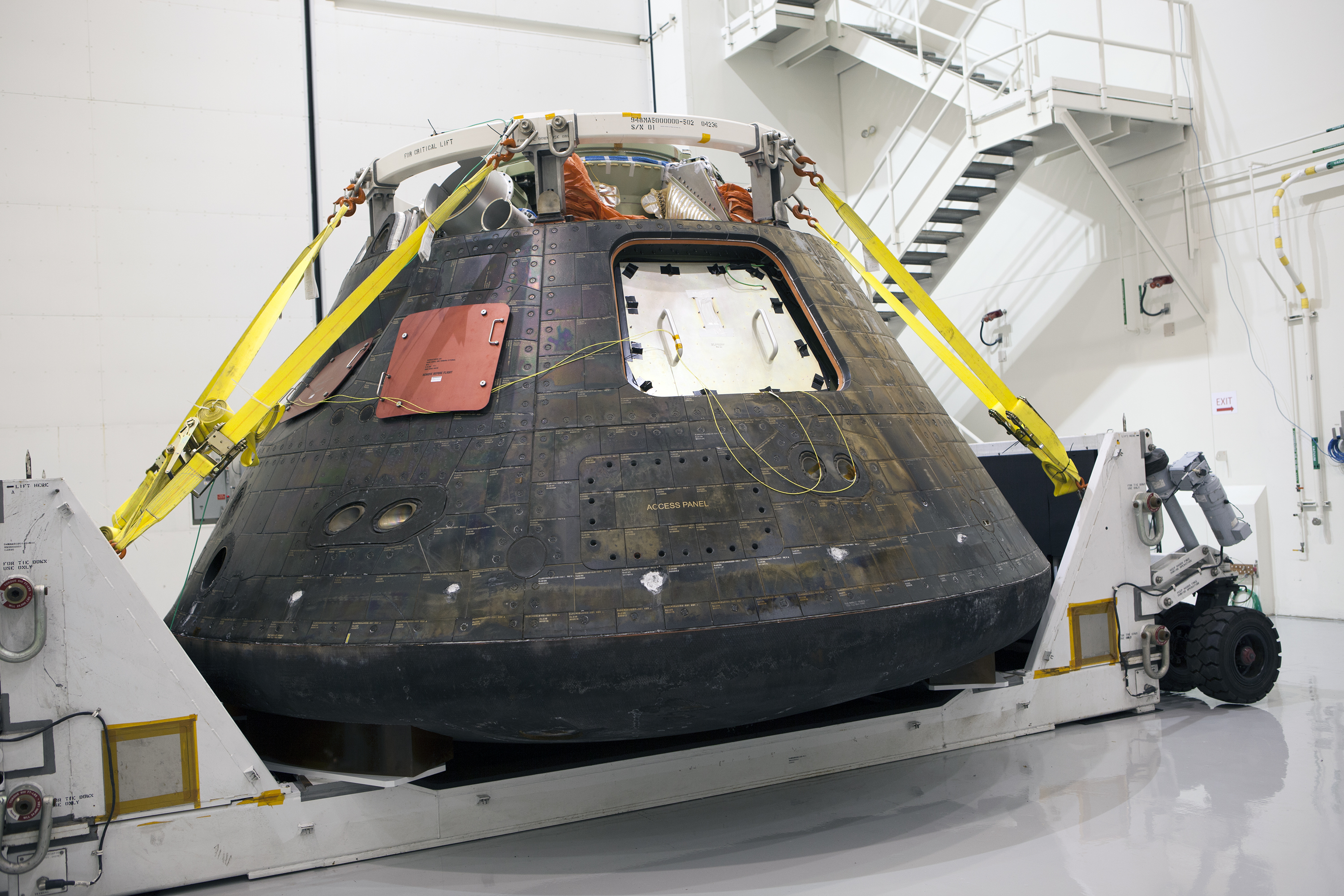
Archive photograph · 2014-12-19 · Kennedy Space Center, Florida, United States


Understand the story.
The new detail
NASA’s two October 23 accounts spell out tests and revised lander operations ahead of its intended return to the Moon. Artemis III is planned for Earth orbit in 2027, using Orion with test versions of vehicles from Blue Origin and SpaceX. Calling this a lunar landing would miss the mission’s stated purpose: practicing how the spacecraft work together before later surface missions. [1] [4]
The tests do different jobs
The agency plans for astronauts to enter Blue Origin’s test vehicle after docking to evaluate its environment and systems. The Starship portion instead focuses on docking and interaction with Orion; the crew would not enter Starship. These are distinct planned tasks, rather than two vehicles undergoing an identical scored test. [2]
A target is still conditional
NASA targets lunar surface missions in 2028 but says readiness will determine which company goes first. Both providers must perform uncrewed demonstrations before crewed lunar missions, with certification still required. The announcement establishes a plan and its gates; it does not establish that hardware has passed them or that the target date is assured. [3] [1]
What to check next
Readers tracking the public program can use NASA’s full mission account linked above to distinguish the announced test objectives from future results. Subsequent evidence would include actual demonstrations, results and readiness decisions. We have not watched or represented a briefing recording as independent reporting, and this account makes no verified claim about a household benefit or program cost. [4] [3]
How we know4 scoped claims · 2 source recordsView evidence
Each claim keeps its full assertion, date, source passage and limits. Source counts describe records, not independent corroboration.
1.Claim 1Attributed
NASA’s October 23 account describes a planned 2027 Artemis III mission with four astronauts aboard Orion, testing rendezvous and docking with Blue Origin and SpaceX vehicles in low Earth orbit before targeted 2028 lunar surface missions.
- Scope
- NASA’s October 23 Artemis III and lander-development accounts; plans for low Earth orbit testing in 2027 and targeted lunar landings in 2028. Agency statements describe planned tests, design changes and readiness conditions, not completed missions, independently assessed costs or assured dates.
- Evidence passage
- Artemis III: opening mission summary; lander-development update: opening architecture paragraphs and Returning American astronauts to the Moon.
- As of
- 2026-10-24
- Limit
- Announced plans, not completed tests, a guaranteed launch date or an achieved landing.
Retrieved 2026-10-24T12:43:13.755Z · NASA Communications
NASA describes its own program and intended benefits. Detailed mission design and dates are plans, not an independent readiness finding or completed test.
Retrieved 2026-10-24T12:43:14.449Z · NASA / Corinne Beckinger
Agency and contractor-development account; provider selection depends on readiness. No independent cost, schedule or safety assurance.
2.Claim 2Attributed
NASA plans crew entry into Blue Origin’s test vehicle after docking, while the later Starship demonstration would test docking without crew entering Starship.
- Scope
- NASA’s October 23 Artemis III and lander-development accounts; plans for low Earth orbit testing in 2027 and targeted lunar landings in 2028. Agency statements describe planned tests, design changes and readiness conditions, not completed missions, independently assessed costs or assured dates.
- Evidence passage
- First stop: Blue Origin’s lunar lander test article; Starship docking demonstration.
- As of
- 2026-10-24
- Limit
- Different planned test objectives and durations cannot be interpreted as comparable performance scores or completed safety certification.
Retrieved 2026-10-24T12:43:13.755Z · NASA Communications
NASA describes its own program and intended benefits. Detailed mission design and dates are plans, not an independent readiness finding or completed test.
3.Claim 3Attributed
NASA says both companies must conduct uncrewed lander demonstrations before crewed lunar missions and that the first landing provider will be selected based on readiness.
- Scope
- NASA’s October 23 Artemis III and lander-development accounts; plans for low Earth orbit testing in 2027 and targeted lunar landings in 2028. Agency statements describe planned tests, design changes and readiness conditions, not completed missions, independently assessed costs or assured dates.
- Evidence passage
- Uncrewed demonstration/certification paragraph before Starship lander concept; Returning American astronauts to the Moon section.
- As of
- 2026-10-24
- Limit
- Requirements do not establish that either company has passed them. No provider has been assigned first place by this account.
Retrieved 2026-10-24T12:43:14.449Z · NASA / Corinne Beckinger
Agency and contractor-development account; provider selection depends on readiness. No independent cost, schedule or safety assurance.
4.Claim 4Attributed
NASA says the Earth-orbit mission aims to assess interoperability, operations and systems before astronauts return to the lunar surface.
- Scope
- NASA’s October 23 Artemis III and lander-development accounts; plans for low Earth orbit testing in 2027 and targeted lunar landings in 2028. Agency statements describe planned tests, design changes and readiness conditions, not completed missions, independently assessed costs or assured dates.
- Evidence passage
- Opening risk-reduction summary and Practicing for Moon missions.
- As of
- 2026-10-24
- Limit
- Agency rationale, not independently measured risk reduction or a cost-benefit finding.
Retrieved 2026-10-24T12:43:13.755Z · NASA Communications
NASA describes its own program and intended benefits. Detailed mission design and dates are plans, not an independent readiness finding or completed test.
What remains open.
- No demonstration results, completed certification, guaranteed launch date or selected first landing provider are established by these updates.
- Independent schedule, cost and safety assessments were not retained; NASA’s purpose and benefits remain attributed.
A revised original, corrected scope or date, contrary primary evidence, changed official status, or verified outcome would reopen the affected claims and article. Earlier versions remain retained.
THIS STORY IN TIME
Keep the dates with the story.
- Reported development
- Evidence as of
- First retained publication
- This version published
Publication times are Central. A development date and an evidence date can differ. Missing dates remain unrecorded.