← 2026-10-28 edition · Sourced reporting
New UN ocean report separates useful monitoring from uncertain carbon removal
As of 2026-10-28 · Publication details
Monitoring[1]
Sensors, observations, data and models. Called the most mature category; coverage gaps remain.
Coastal ecosystems[2]
Mangroves, seagrasses and salt marshes. Carbon storage plus coastal and livelihood roles; site outcomes need evidence.
Marine carbon removal[3]
Proposed atmospheric CO₂ removal and long-term storage. Research, monitoring and regulation still needed.
Capacity to implement[4]
Pacific mapping and training are reported. Training is not a verified removal amount or project return.
October 28 UN News account and its interview with the lead author of a UNEP–UNFCCC report. Three technology categories have different evidence and risks. No independent carbon-credit verification, project profitability, deployment performance or forecast. Cards compare record types and decisions, not a universal sequence, measured duration or shared quantitative scale. Each number retains its own unit, period and population.
Read the records as a table
| Record | Meaning |
|---|---|
| Monitoring | Sensors, observations, data and models. Called the most mature category; coverage gaps remain. [1] |
| Coastal ecosystems | Mangroves, seagrasses and salt marshes. Carbon storage plus coastal and livelihood roles; site outcomes need evidence. [2] |
| Marine carbon removal | Proposed atmospheric CO₂ removal and long-term storage. Research, monitoring and regulation still needed. [3] |
| Capacity to implement | Pacific mapping and training are reported. Training is not a verified removal amount or project return. [4] |
A new UN account puts ocean monitoring first, established coastal ecosystems in a separate category and marine carbon removal in a more uncertain research category. For a community or buyer assessing a project, ask what is actually measured and what remains experimental before accepting a carbon claim. [1] [2] [3] [4]
Still open: The full technical report, its carbon-uptake model and uncertainty are not captured; numerical claims about a six-percent capacity decline and global removal totals are omitted. All open questions ↓
Use the new UN comparison to distinguish monitoring, ecosystem restoration and experimental marine removal →Read the full story
The reporting question: What should coastal communities and project buyers ask before treating ocean technology as a climate solution?
Start with what can be observed
The new UN account identifies major monitoring gaps and places sensors, observation systems, data and modelling in the most mature category. For someone judging a proposal, its useful first question is simple: what has actually been measured? The account does not independently test a particular device. [1]
Restoration has a different proposition
Mangroves, seagrasses and salt marshes store carbon while also serving coasts, ecosystems and livelihoods, according to the report summary. A general benefit does not validate a particular project’s credit volume, cost or financial return. [2]
A removal proposal needs more proof
Marine carbon removal aims to extract and store atmospheric CO₂. The account treats these approaches as uncertain and calls for research, monitoring and regulation. It explicitly warns against using them as a shortcut around emissions cuts or ecosystem protection. [3]
Deployment includes people and institutions
The Pacific examples describe mapping and training, not a measured amount of permanent new removal. Use the linked account to separate the three categories, then ask a proposed project for its own baseline, monitoring, risks and long-term storage evidence. Capacity and local knowledge are part of the work. [1] [3] [4]
Archive photograph · 2009-09-29 · West Bali National Park, Indonesia
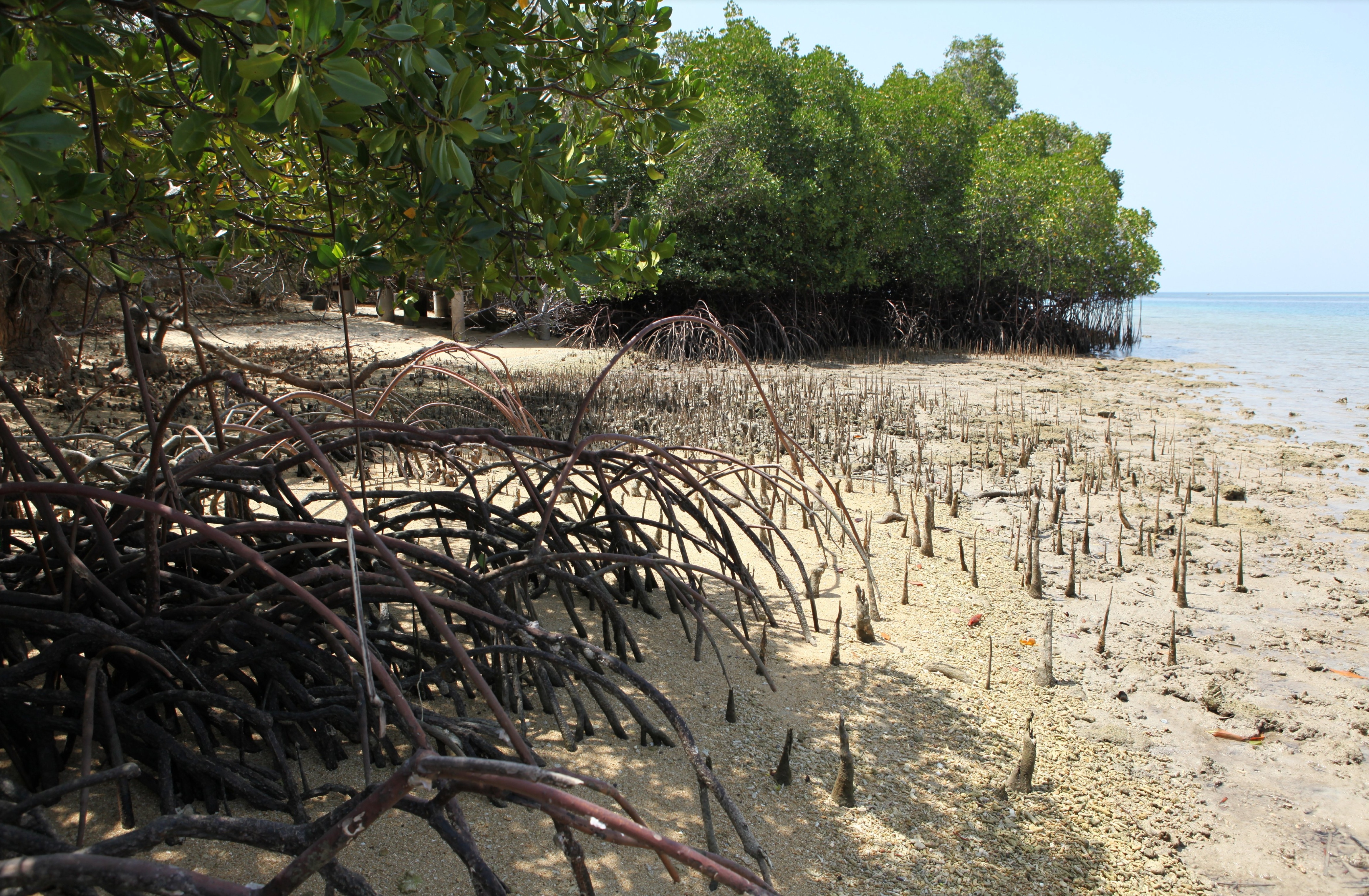

- 1 source record
- UN News, reporting UNEP and UNFCCC work and its own author interview
How we know4 scoped claims · 1 source recordView evidence
Each claim keeps its full assertion, date, source passage and limits. Source counts describe records, not independent corroboration.
1.A new report asks for better measurementsAttributed
UN News’s October 28 account identifies gaps in reliable ocean monitoring, especially in the Southern and Indian Oceans, the Arctic and coastal regions. Lead author Sara Traerup describes monitoring systems, sensors, data and modelling as the most mature and immediately needed technology category.
- Scope
- October 28 UN News account and its interview with the lead author of a UNEP–UNFCCC report. Three technology categories have different evidence and risks. No independent carbon-credit verification, project profitability, deployment performance or forecast.
- Evidence passage
- “Bridging our knowledge gap”; “From sensors to seagrass”, first category.
- As of
- 2026-10-28
- Limit
- Institutional account and report-author interview, not independent instrument evaluation. Underlying report methods and individual deployments are not captured.
Retrieved 2026-10-28T17:07:05.361Z · UN News, reporting UNEP and UNFCCC work and its own author interview
Origin is identified at this publisher. Captured bytes and origin checks do not independently validate the publisher’s underlying inputs, quoted-party claims or downstream effects.
2.Living coastlines offer more than carbonAttributed
The account identifies mangroves, seagrasses and salt marshes as blue-carbon ecosystems and says they also protect coasts, support biodiversity and sustain livelihoods.
- Scope
- October 28 UN News account and its interview with the lead author of a UNEP–UNFCCC report. Three technology categories have different evidence and risks. No independent carbon-credit verification, project profitability, deployment performance or forecast.
- Evidence passage
- “From sensors to seagrass”: second category.
- As of
- 2026-10-28
- Limit
- Broad report findings, not a quantified benefit for a particular restoration site, guaranteed carbon credit or financial return.
Retrieved 2026-10-28T17:07:05.361Z · UN News, reporting UNEP and UNFCCC work and its own author interview
Origin is identified at this publisher. Captured bytes and origin checks do not independently validate the publisher’s underlying inputs, quoted-party claims or downstream effects.
3.Marine removal remains uncertainAttributed
The third category, marine carbon dioxide removal, aims to remove atmospheric CO₂ for long-term storage. The account describes it as highly uncertain and needing research, monitoring and regulation; its author cautions that it must complement emissions reductions and ecosystem protection.
- Scope
- October 28 UN News account and its interview with the lead author of a UNEP–UNFCCC report. Three technology categories have different evidence and risks. No independent carbon-credit verification, project profitability, deployment performance or forecast.
- Evidence passage
- “From sensors to seagrass”: third category and following caution.
- As of
- 2026-10-28
- Limit
- A proposed capability and research need, not demonstrated safe permanent storage, commercial viability or a substitute for reducing emissions.
Retrieved 2026-10-28T17:07:05.361Z · UN News, reporting UNEP and UNFCCC work and its own author interview
Origin is identified at this publisher. Captured bytes and origin checks do not independently validate the publisher’s underlying inputs, quoted-party claims or downstream effects.
4.Capacity is part of deploymentAttributed
The account says Fiji, Papua New Guinea, Solomon Islands and Vanuatu received support to map mangroves and seagrasses and measure stored carbon, with more than 100 people trained in blue-carbon assessment. It emphasizes finance, capacity and local and Indigenous knowledge.
- Scope
- October 28 UN News account and its interview with the lead author of a UNEP–UNFCCC report. Three technology categories have different evidence and risks. No independent carbon-credit verification, project profitability, deployment performance or forecast.
- Evidence passage
- “Islands leading the way”: Pacific mapping and training paragraphs; final local-knowledge paragraph.
- As of
- 2026-10-28
- Limit
- Reported training and mapping are not an independently audited ecosystem outcome or carbon-removal quantity.
Retrieved 2026-10-28T17:07:05.361Z · UN News, reporting UNEP and UNFCCC work and its own author interview
Origin is identified at this publisher. Captured bytes and origin checks do not independently validate the publisher’s underlying inputs, quoted-party claims or downstream effects.
What remains open.
- The full technical report, its carbon-uptake model and uncertainty are not captured; numerical claims about a six-percent capacity decline and global removal totals are omitted.
- No project price, payer, revenue, lifecycle cost, durable storage or independent deployment outcome is established.
- The report-author interview is institutional original reporting, not independent validation of the report.
Reopen this exact version if Unreconciled measurements, ecological harm, weak additionality or unmaintained monitoring. Preserve the earlier case and obtain a new complete source review for changed claims.
THIS STORY IN TIME
Keep the dates with the story.
- Reported development
- Evidence as of
- First retained publication
- This version published
Publication times are Central. A development date and an evidence date can differ. Missing dates remain unrecorded.
What readers add.
Comments are reviewed before they appear. Max includes five comments and two custom story requests each day.
Loading reviewed comments…
Add a comment with Max →