← 2026-10-16 edition · Sourced reporting
Published Oct 16, 2026, 10:00 AM Central · This version Oct 16, 2026, 10:00 AM Central · As of 2026-10-16
Grassley makes Senate control his Iowa pitch. One seat is only part of the math.
Grassley urged dissatisfied Republicans to vote for Senate control, according to an October 14 report. Iowa’s choice matters for nominations, spending and oversight. The Senate currently lists 53 Republicans, 45 Democrats and two independents: one state’s result cannot establish the national outcome. [1] [2] [3] [4] [5]
Inspect the current Senate roster and party totals to check the starting point for control claims. This is a membership record, not an election forecast or a local voting guide. →United States Senate and Iowa’s November 2026 general election; current membership checked October 16. Campaign statements are attributed. Seat scenarios assume 100 filled seats and unchanged affiliations; they are not forecasts or a claim about independent caucus choices.
- 6 source records
- Original reporting
- Radio Iowa
- Keokuk County Auditor
- United States Senate
- +1 more
Still open: No race rating, poll result, majority probability or independent caucus alignment is asserted. Grassley’s unnamed poll reference is not adopted as evidence. All open questions ↓
Reporting question · As of 2026-10-16
The question: What does Grassley’s new appeal tell us about Iowa’s Senate race and the federal power at stake?
United States Senate and Iowa’s November 2026 general election; current membership checked October 16. Campaign statements are attributed. Seat scenarios assume 100 filled seats and unchanged affiliations; they are not forecasts or a claim about independent caucus choices.
Current Senate roster checked October 16, 2026 · seats out of 100
Current membership, not November results. Independents are shown separately. These bars do not establish caucus alignment or how any senator will vote.
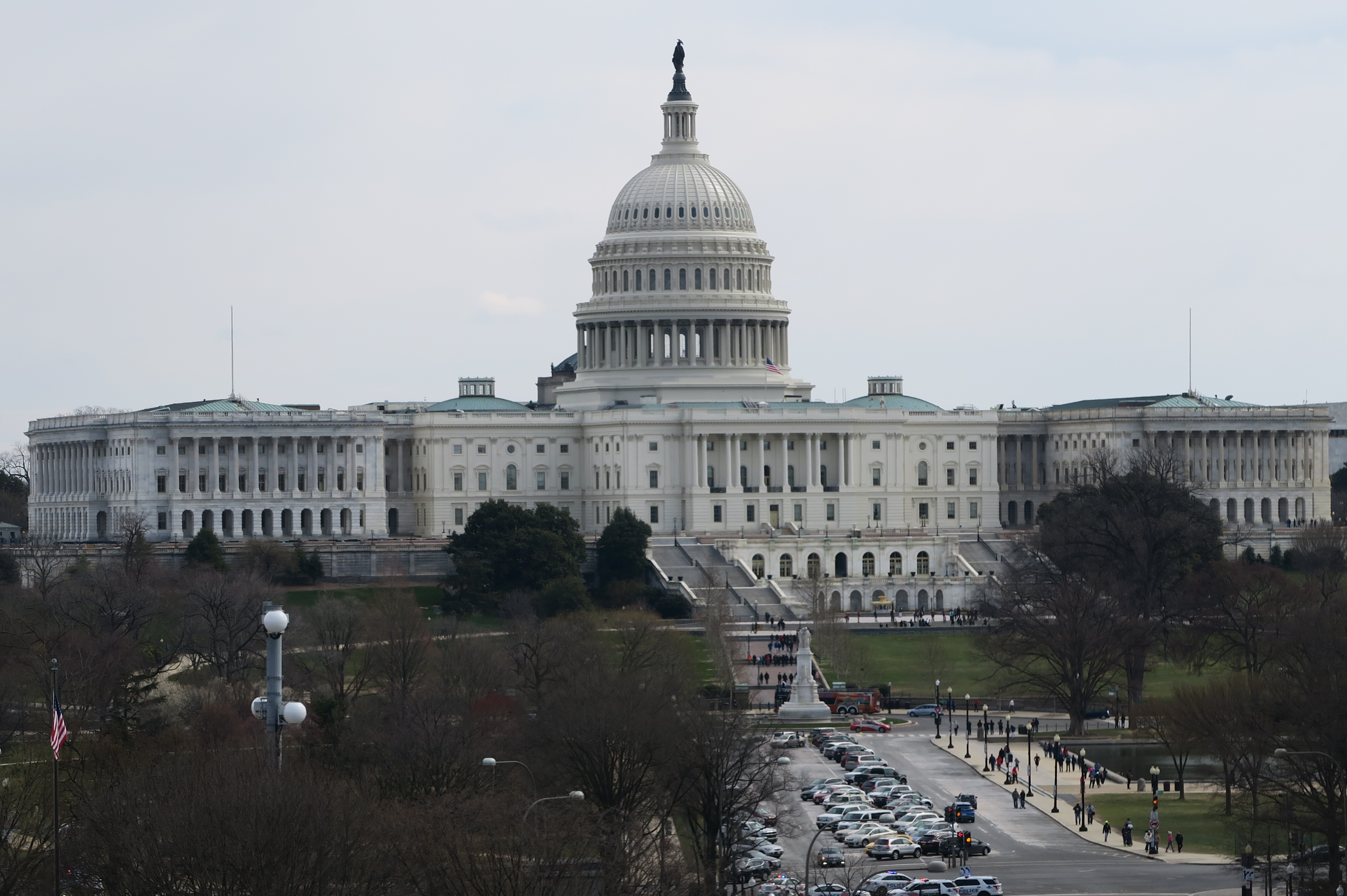
Archive photograph · 2018-03-25 · Washington, D.C.

Understand the story.
The new appeal
Isabella Luu’s report for Iowa Public Radio, carried by Radio Iowa, describes Grassley’s appeal to Republicans unhappy with the party’s work in Washington. His argument was about who would run the Senate. It is a campaign message, not a measured account of voter sentiment. See the full report for his words. [1]
Three names, one Senate seat
The official Iowa notice lists Turek, Hinson and Laehn. This report examines the control argument; yesterday’s separate Senate debate report covered policy differences. Naming all three avoids turning a major-party debate into the complete ballot. [2]
Read the net change
Republicans start from 53 seats in the current roster. A net loss of two would leave 51; three would leave 50; four would leave 49. Wins elsewhere offset losses. These scenarios assume a full chamber and unchanged affiliations, and do not project any race. The vice president may break tied votes. [3] [4]
The practical stakes
Senators can approve or reject nominees, conduct investigations and shape military policy through funding and oversight. Federal lawmaking still requires House and presidential decisions. Senate control changes power over these choices; it does not guarantee a campaign promise will become law. [4] [5]
How we know5 scoped claims · 6 source recordsView evidence
Each claim keeps its full assertion, date, source passage and limits. Source counts describe records, not independent corroboration.
1.A control-of-Congress appealAttributed
Radio Iowa’s October 14 report, credited to Isabella Luu of Iowa Public Radio, says Grassley urged Republicans dissatisfied with the party’s performance in Washington to vote Republican to preserve Senate control.
- Scope
- United States Senate and Iowa’s November 2026 general election; current membership checked October 16. Campaign statements are attributed. Seat scenarios assume 100 filled seats and unchanged affiliations; they are not forecasts or a claim about independent caucus choices.
- Evidence passage
- Article body: opening paragraph, account of the Westside Conservative Club appearance and closing reporter credit.
- As of
- 2026-10-16
- Limit
- A reported campaign appeal; it establishes neither the prevalence of dissatisfaction nor any race outcome.
Retrieved 2026-10-16T14:01:49.976Z · Radio Iowa
Original attributed reporting of Grassley’s October 14 Urbandale appearance, republished by Radio Iowa with the reporter credit. We did not attend, interview him or obtain a full transcript. His assessment of voter dissatisfaction and polls is a political claim.
2.The actual Iowa Senate fieldSupported
The Keokuk County Auditor’s October 14 general-election notice lists Josh Turek (Democratic), Ashley Hinson (Republican) and Thomas Laehn (Libertarian) for U.S. senator.
- Scope
- United States Senate and Iowa’s November 2026 general election; current membership checked October 16. Campaign statements are attributed. Seat scenarios assume 100 filled seats and unchanged affiliations; they are not forecasts or a claim about independent caucus choices.
- Evidence passage
- NOTICE OF ELECTION → complete candidate listing → U.S. Senator.
- As of
- 2026-10-16
- Limit
- A current official notice; naming the field does not establish any candidate’s policy positions or chance of winning.
Retrieved 2026-10-16T14:01:50.463Z · Keokuk County Auditor
Official current county notice lists the statewide Senate candidates. County polling locations and hours cannot establish rules elsewhere.
3.A 100-seat snapshotSupported
The Senate’s current roster lists 53 Republicans, 45 Democrats and two independents, totaling 100. From 53, a net loss of two seats leaves 51, three leaves 50, and four leaves 49, assuming all seats are filled and affiliations otherwise unchanged.
- Scope
- United States Senate and Iowa’s November 2026 general election; current membership checked October 16. Campaign statements are attributed. Seat scenarios assume 100 filled seats and unchanged affiliations; they are not forecasts or a claim about independent caucus choices.
- Evidence passage
- Information about Current Senators → Party Division, 119th Congress; arithmetic: 53+45+2=100; 53−2=51; 53−3=50; 53−4=49.
- As of
- 2026-10-16
- Limit
- Conditional arithmetic, not an election forecast, net-gain prediction or an assignment of independents to a party.
Retrieved 2026-10-16T14:01:49.933Z · United States Senate
Undated current membership and party totals, checked October 16; background, not a fresh electoral result or prediction. Independents remain a separate category.
4.What the seat can affectSupported
The Senate describes its role in approving or rejecting executive and judicial nominees, investigations, and military policy through appropriations and oversight. Its tie-vote guide says the vice president can vote when senators are equally divided.
- Scope
- United States Senate and Iowa’s November 2026 general election; current membership checked October 16. Campaign statements are attributed. Seat scenarios assume 100 filled seats and unchanged affiliations; they are not forecasts or a claim about independent caucus choices.
- Evidence passage
- Powers and Procedures → Nominations, Investigations, Declarations of War; Tie Votes → opening constitutional rule.
- As of
- 2026-10-16
- Limit
- Specific outcomes depend on votes and procedures; a party’s seat total does not guarantee a policy result.
Retrieved 2026-10-16T14:01:49.879Z · United States Senate
Institutional background; describes powers and procedural limits, not a promise any future majority will use them in a particular way.
Retrieved 2026-10-16T14:01:50.518Z · United States Senate
Background constitutional rule and examples of tie votes, not a forecast of any future vote or organizing arrangement.
5.A Senate win does not enact a lawSupported
USAGov explains that both chambers must pass the same version of an ordinary bill before presidential consideration; a veto and possible override create further decisions.
- Scope
- United States Senate and Iowa’s November 2026 general election; current membership checked October 16. Campaign statements are attributed. Seat scenarios assume 100 filled seats and unchanged affiliations; they are not forecasts or a claim about independent caucus choices.
- Evidence passage
- How a bill becomes a law → both chambers, presidential decision and veto/override paragraphs.
- As of
- 2026-10-16
- Limit
- Ordinary legislation; not a full account of every special Senate procedure.
Retrieved 2026-10-16T14:01:50.165Z · USAGov
Dated background on ordinary legislation, not a new October policy announcement.
What remains open.
- No race rating, poll result, majority probability or independent caucus alignment is asserted. Grassley’s unnamed poll reference is not adopted as evidence.
- Alaska debate capture returned HTTP 403; Alaska and Texas rosters and the Texas transcript are outside installed capture permissions. A second cross-state election comparison remains held.
- The original report carries an Iowa Public Radio credit; it is one reporting chain, not independent confirmation by two newsrooms. No full speech, new outreach or interview was obtained.
A newer or corrected original that changes the central finding, scope, operational status or applicable dates requires a separately identified revision and renewed source review.
THIS STORY IN TIME
Keep the dates with the story.
- Reported development
- Evidence as of
- First retained publication
- This version published
Publication times are Central. A development date and an evidence date can differ. Missing dates remain unrecorded.