← 2026-10-28 edition · Sourced reporting
NTSB calls for visible, monitored robot boats after Lake Erie collision
As of 2026-10-28 · Publication details
The new action concerns an older accident[1] [5]
October 27 recommendation issuance; 2024 collision and October 7 report are older.
Trace the actual operating mode[2]
Holding waypoints does not establish collision avoidance in traffic.
Keep the corrective record[3]
NOAA manual and SeaTrac equipment changes exist; adequacy still needs evidence.
Check deployment, not the label[4]
Test detection and match monitoring to actual autonomy. Recommendations are not adopted regulation.
U.S. inland and territorial water safety: NTSB October 27 release issuing recommendations after an August 10, 2024 Lake Erie collision near Monroe, Michigan. MIR-26-32 report dated October 7 is older context. No general automation failure rate or newly adopted regulation. Cards are record checks, not a universal sequence, duration or common quantitative scale.
Read the records as a table
| Record | Meaning |
|---|---|
| The new action concerns an older accident | October 27 recommendation issuance; 2024 collision and October 7 report are older. [1] [5] |
| Trace the actual operating mode | Holding waypoints does not establish collision avoidance in traffic. [2] |
| Keep the corrective record | NOAA manual and SeaTrac equipment changes exist; adequacy still needs evidence. [3] |
| Check deployment, not the label | Test detection and match monitoring to actual autonomy. Recommendations are not adopted regulation. [4] |
NTSB’s October 27 safety call asks for uncrewed boats that other mariners can detect and operators supervise as their actual capabilities require. Its Lake Erie case shows that automatically holding position does not establish collision-avoidance ability. [1] [2] [3] [4] [5]
Still open: Fresh recommendation issuance as described by NTSB; older collision and report dates retained. All open questions ↓
Read the six agency recommendations and linked investigation before evaluating a deployment →Read the full story
The reporting question: What does the safety call reveal about operating an uncrewed boat around people?
The new action concerns an older accident
Six recommendations were issued Tuesday, NTSB says. The collision occurred in August 2024; the underlying report bears an October 7 date. Neither is presented as a newly occurring accident or a new rule. [1] [5]
Trace the actual operating mode
NTSB found NOAA’s low-profile craft difficult to perceive and inadequately monitored while it maintained waypoints in adapted-hold mode. Position holding is different from demonstrated autonomous navigation around nearby boats. [2]
Keep the corrective record
The report records NOAA’s 2025 operating manual and SeaTrac’s optional reflector kit and lighting/AIS changes. These steps challenge a claim that nothing changed; their existence alone does not settle whether remaining safety needs are met. [3]
Check deployment, not the label
Operators and purchasers can use the recommendations to ask how a craft is detected by typical nearby boats, how that is tested and who monitors it. NTSB also calls for a Coast Guard standards framework. Recommendations do not establish a completed fix or adopted regulation. [4]
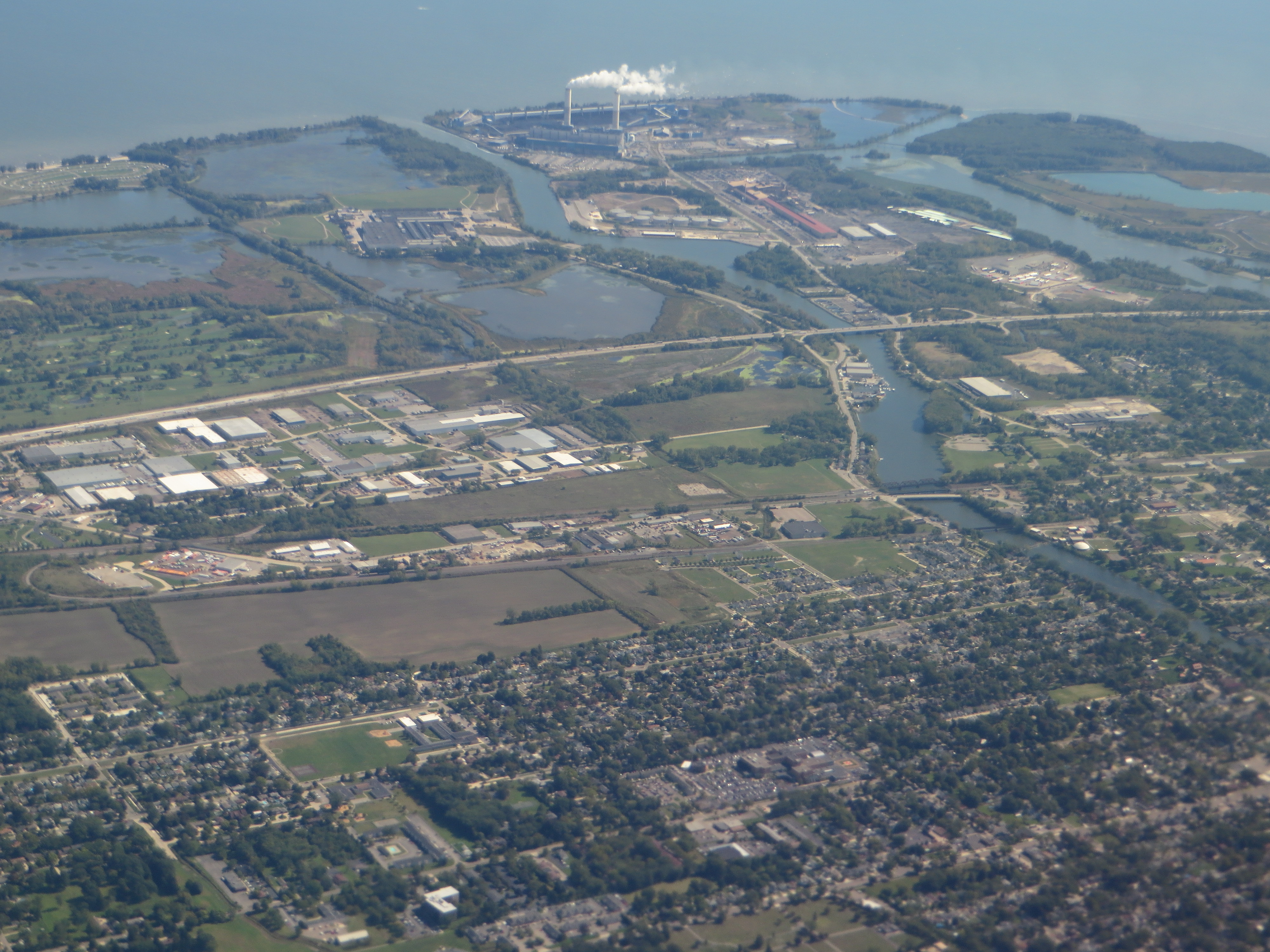
Archive photograph · 2015-09-24 · Monroe, Michigan, United States

- 2 source records
- National Transportation Safety Board
How we know5 scoped claims · 2 source recordsView evidence
Each claim keeps its full assertion, date, source passage and limits. Source counts describe records, not independent corroboration.
1.The new action concerns an older accidentAttributed
NTSB’s October 27 release says it issued six recommendations Tuesday following the August 10, 2024 Lake Erie collision.
- Scope
- U.S. inland and territorial water safety: NTSB October 27 release issuing recommendations after an August 10, 2024 Lake Erie collision near Monroe, Michigan. MIR-26-32 report dated October 7 is older context. No general automation failure rate or newly adopted regulation.
- Evidence passage
- October 27 release: opening issuance and August 10, 2024 event paragraphs.
- As of
- 2026-10-28
- Limit
- Fresh recommendation issuance as described by NTSB; older collision and report dates retained.
Retrieved 2026-10-28T11:30:35.496Z · National Transportation Safety Board
Supports only the cited visible passages. Retrieval does not establish accuracy, independence, completeness or downstream effects.
2.Trace the actual operating modeAttributed
NTSB found NOAA’s low-profile craft difficult to perceive and inadequately monitored while it maintained waypoints in adapted-hold mode. Position holding is different from demonstrated autonomous navigation around nearby boats.
- Scope
- U.S. inland and territorial water safety: NTSB October 27 release issuing recommendations after an August 10, 2024 Lake Erie collision near Monroe, Michigan. MIR-26-32 report dated October 7 is older context. No general automation failure rate or newly adopted regulation.
- Evidence passage
- Release adapted-hold and perceptibility paragraphs; report Executive Summary vii–viii and section 2.2.2.
- As of
- 2026-10-28
- Limit
- NTSB findings in one configuration and traffic setting, not a universal robot-boat failure rate.
Retrieved 2026-10-28T11:30:35.496Z · National Transportation Safety Board
Supports only the cited visible passages. Retrieval does not establish accuracy, independence, completeness or downstream effects.
Retrieved 2026-10-28T11:30:35.552Z · National Transportation Safety Board
Supports only the cited visible passages. Retrieval does not establish accuracy, independence, completeness or downstream effects.
3.Keep the corrective recordAttributed
The report records NOAA’s 2025 operating manual and SeaTrac’s optional reflector kit and lighting/AIS changes. These steps challenge a claim that nothing changed; their existence alone does not settle whether remaining safety needs are met.
- Scope
- U.S. inland and territorial water safety: NTSB October 27 release issuing recommendations after an August 10, 2024 Lake Erie collision near Monroe, Michigan. MIR-26-32 report dated October 7 is older context. No general automation failure rate or newly adopted regulation.
- Evidence passage
- MIR-26-32 sections 1.10.2 and 1.10.3, printed pp.33–34.
- As of
- 2026-10-28
- Limit
- No postrelease compliance audit or independent NTDS deployment test.
Retrieved 2026-10-28T11:30:35.552Z · National Transportation Safety Board
Supports only the cited visible passages. Retrieval does not establish accuracy, independence, completeness or downstream effects.
4.Check deployment, not the labelSupported
Operators and purchasers can use the recommendations to ask how a craft is detected by typical nearby boats, how that is tested and who monitors it. NTSB also calls for a Coast Guard standards framework. Recommendations do not establish a completed fix or adopted regulation.
- Scope
- U.S. inland and territorial water safety: NTSB October 27 release issuing recommendations after an August 10, 2024 Lake Erie collision near Monroe, Michigan. MIR-26-32 report dated October 7 is older context. No general automation failure rate or newly adopted regulation.
- Evidence passage
- Recommendation paragraphs addressed to NOAA, SeaTrac and Coast Guard.
- As of
- 2026-10-28
- Limit
- A safety investigation is not a civil-liability judgment or proof recommendations are implemented.
Retrieved 2026-10-28T11:30:35.496Z · National Transportation Safety Board
Supports only the cited visible passages. Retrieval does not establish accuracy, independence, completeness or downstream effects.
5.Older report dateAttributed
MIR-26-32 bears an October 7, 2026 report date.
- Scope
- U.S. inland and territorial water safety: NTSB October 27 release issuing recommendations after an August 10, 2024 Lake Erie collision near Monroe, Michigan. MIR-26-32 report dated October 7 is older context. No general automation failure rate or newly adopted regulation.
- Evidence passage
- MIR-26-32 cover and printed p.47: Report Date, October 7, 2026.
- As of
- 2026-10-28
- Limit
- The release/report interval is unexplained; report date is retained as older context.
Retrieved 2026-10-28T11:30:35.552Z · National Transportation Safety Board
Supports only the cited visible passages. Retrieval does not establish accuracy, independence, completeness or downstream effects.
What remains open.
- Fresh recommendation issuance as described by NTSB; older collision and report dates retained.
- NTSB findings in one configuration and traffic setting, not a universal robot-boat failure rate.
- No postrelease compliance audit or independent NTDS deployment test.
- A safety investigation is not a civil-liability judgment or proof recommendations are implemented.
- The release describes October 27 issuance while MIR-26-32 is dated October 7. The interval is not independently explained; the report’s earlier date is not concealed.
A corrected original record, verified changed status, missing underlying documentation or measured outcome at this scope requires a separately preserved version and fresh exact-source review.
THIS STORY IN TIME
Keep the dates with the story.
- Reported development
- Evidence as of
- First retained publication
- This version published
Publication times are Central. A development date and an evidence date can differ. Missing dates remain unrecorded.