← 2026-10-24 edition · Sourced reporting
Published Oct 24, 2026, 8:32 AM Central · This version Oct 24, 2026, 8:32 AM Central · As of 2026-10-24
Wisconsin counted fewer brown bats; weather and roost shifts complicate the result
WPR’s October 24 account reports lower counts for two brown-bat species within Wisconsin’s summer monitoring. More than 20,000 bats were counted at 120 roosts overall. That sample is not a statewide census or a count of deaths; experts describe several possible explanations. [1] [2]
Read WPR’s count explanation and find its links to DNR’s bat guidance →Wisconsin; WPR’s October 24, 2026 original account of June–July 2026 roost monitoring. More than 20,000 bats counted at 120 monitored roosts is not a statewide census, a count of unique deaths or a controlled causal estimate.
- 1 source record
- Original reporting
- Wisconsin Public Radio / Sara Gabler
Still open: Underlying DNR roost-level observations, sampling coverage and an identical-site year-to-year comparison were not independently reproduced. All open questions ↓
Reporting question · As of 2026-10-24
The question: What does Wisconsin’s newly reported summer bat count establish about recovery, and what can it not measure?
Wisconsin; WPR’s October 24, 2026 original account of June–July 2026 roost monitoring. More than 20,000 bats counted at 120 monitored roosts is not a statewide census, a count of unique deaths or a controlled causal estimate.
120 monitored roosts
More than 20,000 bats counted in June–July 2026, according to WPR. Not the statewide population.
[1]Interpret the change cautiously
Weather, movement and disease concerns are discussed; the report does not isolate the cause of lower brown-bat counts.
[2]Check DNR’s guide
Find species and property-guidance routes; this graphic is not an exclusion or handling protocol.
[3]Wisconsin; WPR’s October 24, 2026 original account of June–July 2026 roost monitoring. More than 20,000 bats counted at 120 monitored roosts is not a statewide census, a count of unique deaths or a controlled causal estimate. Separate checks; no common numerical scale or implied sequence.
Read the process as a table
| Component | Meaning | Evidence |
|---|---|---|
| 120 monitored roosts | More than 20,000 bats counted in June–July 2026, according to WPR. Not the statewide population. | [1] |
| Interpret the change cautiously | Weather, movement and disease concerns are discussed; the report does not isolate the cause of lower brown-bat counts. | [2] |
| Check DNR’s guide | Find species and property-guidance routes; this graphic is not an exclusion or handling protocol. | [3] |
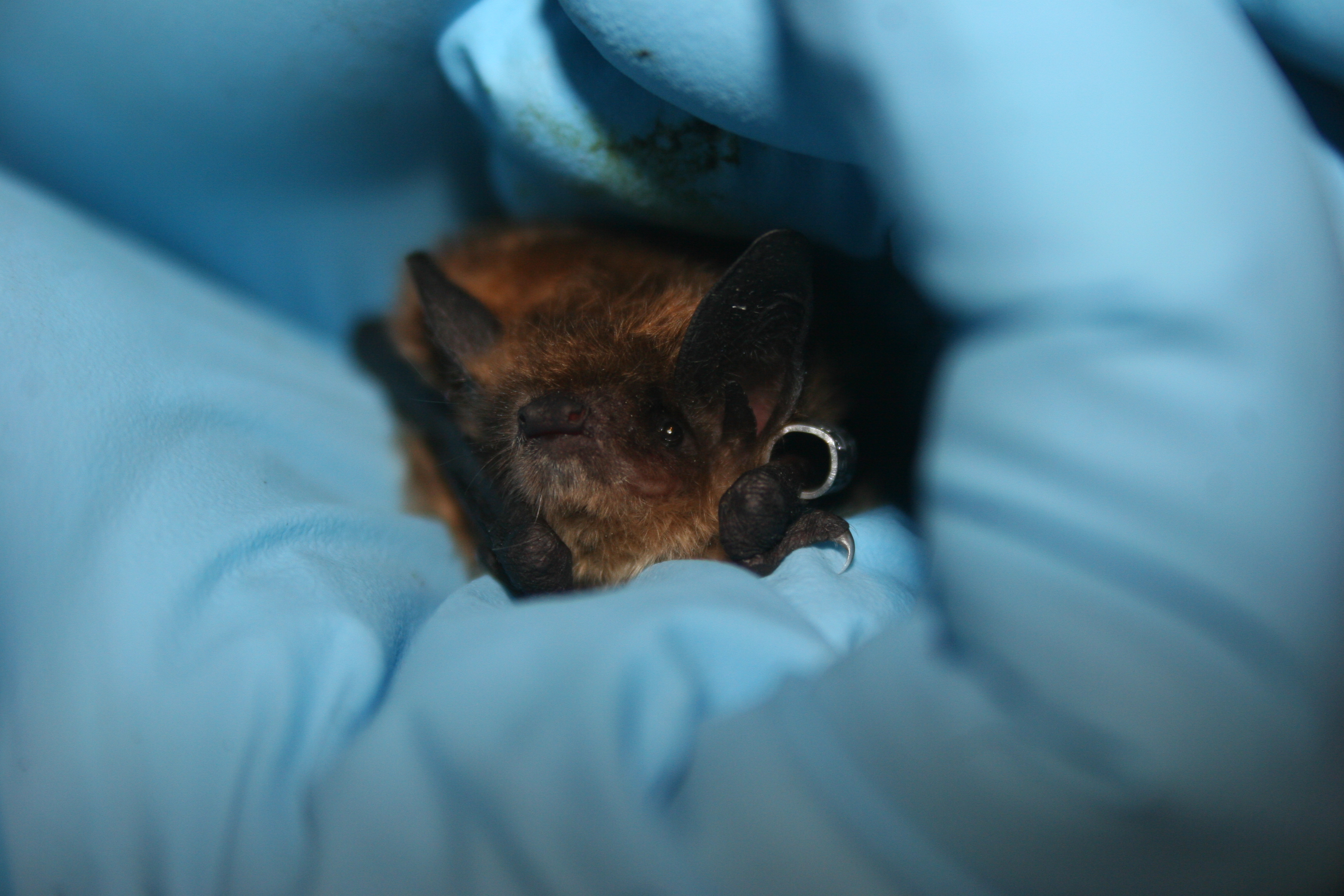
Archive photograph · 2012-06-19 · Location not specified in retained photograph metadata


Understand the story.
A new account of the summer count
WPR’s October 24 report describes more than 150 scientists and volunteers counting bats as they left 120 roosts in June and July. The reported total exceeded 20,000. The observations concern monitored roosts, rather than every bat in Wisconsin. [1]
Fewer counted does not mean that many died
Experts told WPR that little brown and big brown bat counts were lower than a year earlier. A count can change when animals move between roosts or when weather affects observation. We have not reproduced the roost-level data or established an identical-site comparison. [1] [2]
The cause remains open
The account discusses unfavorable counting weather, temperature-driven roost shifts and continuing white-nose syndrome concerns. It does not measure how much each explains. The uncertainty matters to people watching bats around buildings or supporting conservation: a smaller observed count cannot by itself diagnose what happened to the animals. [2]
Find the responsible guidance
Read WPR’s original count explanation linked above for the monitoring context and its links to Wisconsin DNR’s species and property guidance. The DNR site failed a direct server access check here, so we do not promise that onward route works everywhere. We provide no handling instructions or seasonal exclusion deadline. The photograph is species context from 2012. [3]
How we know3 scoped claims · 1 source recordView evidence
Each claim keeps its full assertion, date, source passage and limits. Source counts describe records, not independent corroboration.
1.A monitored sampleAttributed
WPR reports more than 20,000 bats counted at 120 roosts during June and July, with more than 150 scientists and volunteers participating.
- Scope
- Wisconsin; WPR’s October 24, 2026 original account of June–July 2026 roost monitoring. More than 20,000 bats counted at 120 monitored roosts is not a statewide census, a count of unique deaths or a controlled causal estimate.
- Evidence passage
- Opening paragraph and description of bats emerging from bat houses and barns.
- As of
- 2026-10-24
- Limit
- A monitored roost count is not the statewide population; possible repeat observations and sample coverage are not resolved by the account.
Retrieved 2026-10-24T12:49:24.098Z · Wisconsin Public Radio / Sara Gabler
Underlying roost-level data, identical-site comparison, survey effort and causal adjustments were not independently reproduced. No current-season exclusion advice is adopted from this report.
2.Several explanations remainAttributed
WPR’s experts describe lower counts of little brown and big brown bats than a year earlier, while discussing unfavorable counting weather, temperature-related roost shifts and continuing white-nose syndrome concerns as possible explanations.
- Scope
- Wisconsin; WPR’s October 24, 2026 original account of June–July 2026 roost monitoring. More than 20,000 bats counted at 120 monitored roosts is not a statewide census, a count of unique deaths or a controlled causal estimate.
- Evidence passage
- By the numbers and Ongoing concern about white-nose syndrome sections.
- As of
- 2026-10-24
- Limit
- These mechanisms are alternatives, not equally measured contributions; the captured report does not isolate a cause or establish that missing bats died.
Retrieved 2026-10-24T12:49:24.098Z · Wisconsin Public Radio / Sara Gabler
Underlying roost-level data, identical-site comparison, survey effort and causal adjustments were not independently reproduced. No current-season exclusion advice is adopted from this report.
3.Use the responsible agency guideAttributed
WPR directs readers to the Wisconsin DNR Bat Program for species information and routes to bat-house and property guidance.
- Scope
- Wisconsin; WPR’s October 24, 2026 original account of June–July 2026 roost monitoring. More than 20,000 bats counted at 120 monitored roosts is not a statewide census, a count of unique deaths or a controlled causal estimate.
- Evidence passage
- Look out for your flying neighbors: final paragraphs and linked Bat Program website.
- As of
- 2026-10-24
- Limit
- No personal health guidance, bat handling instruction or seasonal exclusion deadline is given by NTDS. Direct DNR retrieval failed here; the same guide was visibly read through the web tool. No underlying DNR dataset is captured.
Retrieved 2026-10-24T12:49:24.098Z · Wisconsin Public Radio / Sara Gabler
Underlying roost-level data, identical-site comparison, survey effort and causal adjustments were not independently reproduced. No current-season exclusion advice is adopted from this report.
What remains open.
- Underlying DNR roost-level observations, sampling coverage and an identical-site year-to-year comparison were not independently reproduced.
- The report cannot establish how much weather, movement or disease contributed, or turn a count difference into deaths.
- The DNR guide was visible through the web tool; direct HTTPS retrieval from this server failed DNS resolution. Its underlying dataset and detailed exclusion protocol are not captured or adopted.
- No NTDS field observation, interview, audience comprehension or engagement measurement.
A dated roost-level release, effort-adjusted identical-site comparison, expert correction or changed responsible-agency advice would reopen the interpretation and service link.
THIS STORY IN TIME
Keep the dates with the story.
- Reported development
- Evidence as of
- First retained publication
- This version published
Publication times are Central. A development date and an evidence date can differ. Missing dates remain unrecorded.
What readers add.
Comments are reviewed before they appear. Max includes five comments and two custom story requests each day.
Loading reviewed comments…
Add a comment with Max →