← 2026-10-13 edition · Sourced reporting
Published Oct 13, 2026, 9:06 AM Central · This version Oct 13, 2026, 10:00 AM Central · As of 2026-10-13
Stopping Ebola takes more than a border check
Kenya has received protective gear and tests after a fatal imported Bundibugyo Ebola case. The wider challenge is reaching exposed people: WHO’s dated DRC snapshot leaves 5,794 listed contacts outside the reported reached count. [1] [3] [5]
Read WHO’s public Ebola guide for general transmission, prevention and care information. It does not diagnose an exposure or confirm a local service is available. →WHO records available by 13 October 2026, with a 12 October Kenya supply development and an explicitly dated 4 October DRC contact snapshot; no individual diagnosis, travel clearance or claim of access to local care.
- 3 source records
- World Health Organization
Still open: No newer DRC contact follow-up snapshot has been verified in this case; do not silently relabel 4 October numbers as current. All open questions ↓
Reporting question · As of 2026-10-13
The question: After Kenya’s imported Ebola case, what helps stop the outbreak—and what should readers make of the risk?
WHO records available by 13 October 2026, with a 12 October Kenya supply development and an explicitly dated 4 October DRC contact snapshot; no individual diagnosis, travel clearance or claim of access to local care.
DRC response snapshot as of 4 October 2026 · listed contacts
WHO reported 80.4% coverage; response target 85%.
29,535 listed contacts minus 23,741 reached.
Two parts of the same 29,535-contact denominator. Not reported reached is an arithmetic complement; it does not mean infected, permanently lost or never followed. This is a dated snapshot, not current coverage.
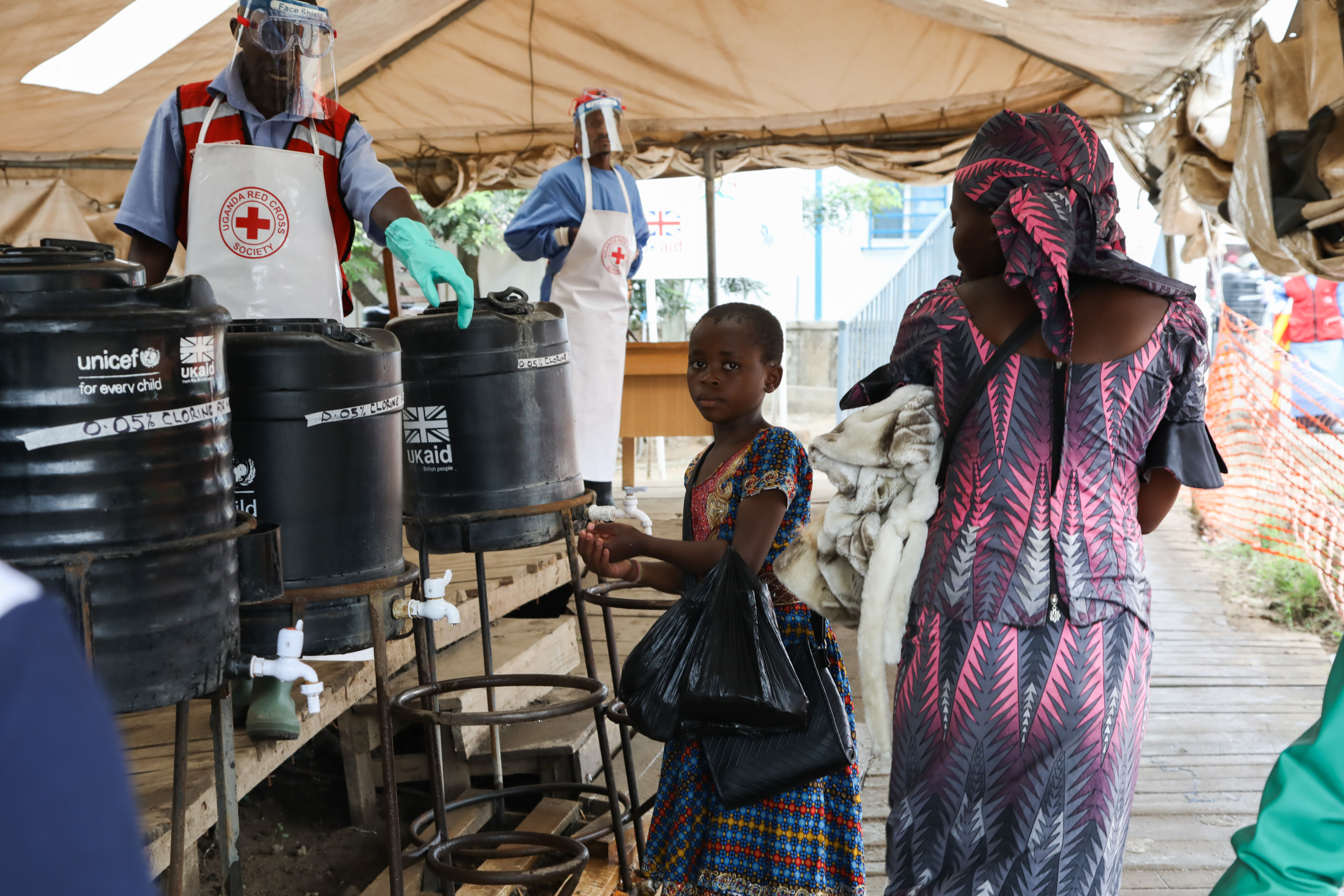
Archive photograph · 2019-08-21 · Ugandan border crossing with the Democratic Republic of the Congo

Understand the story.
Protect the people who provide care
When Ebola reaches a hospital, the people caring for patients need protection. In a 12 October announcement, WHO said it had handed Kenya roughly US$70,000 in supplies, including protective clothing, face shields, testing kits and sample containers. Those tools are meant to make care and testing safer; the announcement does not establish their effect. [1] [2] [7]
One journey widens the response
The shipment follows a fatal imported case. WHO says a patient travelled from the DRC through Uganda to Kenya and died on 5 October. The timing of symptoms during travel remained unclear, so the journey alone cannot establish who was exposed. [3]
The gap behind the headline
The DRC snapshot shows the scale of follow-up. WHO reported 23,741 of 29,535 contacts reached as of 4 October: 80.4%, below its 85% target. The difference is 5,794 outside that reached count. These are listed contacts—not infections or today’s coverage. [4] [5]
The reason follow-up matters is concrete. WHO’s general Ebola guidance describes transmission through an ill person’s body fluids or contaminated materials, and monitoring contacts for 21 days. It also says early supportive care can improve survival. Finding illness and connecting someone with care are therefore part of the response, alongside protection for health workers. [8] [7]
Keep the geography in the risk
WHO’s 8 October bulletin repeats its 14 August assessment: very high risk in the DRC, high in land-border neighbours, low in the rest of Africa and globally. A Kenya assessment was still underway. Risk changes with geography; the headline should preserve that boundary. [6]
What would show progress?
Kenya’s 12 October update lists 127 contacts, including 94 in quarantine. Those different measures do not yield a follow-up coverage rate. The next useful evidence is whether exposed people are consistently reached and the supplies reach frontline teams. For practical background, start with WHO’s public Ebola guide linked below. [9] [7]
How we know9 scoped claims · 3 source recordsView evidence
Each claim keeps its full assertion, date, source passage and limits. Source counts describe records, not independent corroboration.
1.Gear and tests handed to KenyaAttributed
WHO announced a handover of approximately US$70,000 in protective and diagnostic supplies to Kenya on 12 October.
- Scope
- WHO Kenya response announcement.
- Evidence passage
- Article opening paragraph; extracted line 124.
- As of
- 2026-10-12
- Limit
- Approximate shipment value; a handover is not proof of delivery to every facility or prevention of infection.
Retrieved 2026-10-13T13:44:58.341Z · World Health Organization
A handover announcement does not establish distribution to each facility, prevention of infections or completion of contact follow-up.
2.What the shipment containsAttributed
The announced supplies include protective clothing, face protection, testing kits and containers for transporting samples.
- Scope
- Items listed in the WHO Kenya release.
- Evidence passage
- Supplies paragraph; extracted line 126.
- As of
- 2026-10-12
- Limit
- No quantities for each item or facility-level receipt are established.
Retrieved 2026-10-13T13:44:58.341Z · World Health Organization
A handover announcement does not establish distribution to each facility, prevention of infections or completion of contact follow-up.
3.Fatal imported case in KenyaAttributed
WHO reported a laboratory-confirmed imported Bundibugyo virus disease case in Kenya after travel from the DRC through Uganda; the patient died on 5 October.
- Scope
- Single imported case described in WHO’s 8 October bulletin.
- Evidence passage
- Situation at a glance, first paragraph; extracted lines 200 and 217.
- As of
- 2026-10-08
- Limit
- A travel-linked case does not by itself establish community spread in Kenya; timing of symptoms during travel is unresolved in the bulletin.
Retrieved 2026-10-13T13:44:57.369Z · World Health Organization
WHO synthesizes national surveillance information; this case does not audit reporting completeness, individual exposures or current local service access.
4.23,741 contacts reachedAttributed
WHO reported 23,741 of 29,535 listed DRC contacts reached as of 4 October, or 80.4%, against an 85% response target.
- Scope
- DRC contact follow-up snapshot reported on 8 October.
- Evidence passage
- Description of the situation, Contact follow-up paragraph; extracted line 213.
- As of
- 2026-10-04
- Limit
- A dated operational snapshot; does not measure all infections, the population’s risk or current contact coverage.
Retrieved 2026-10-13T13:44:57.369Z · World Health Organization
WHO synthesizes national surveillance information; this case does not audit reporting completeness, individual exposures or current local service access.
5.5,794 outside the reached countInferred
Subtracting WHO’s reached count from its listed-contact denominator gives 5,794 contacts not in the reported reached count.
- Scope
- Arithmetic difference in the same DRC snapshot: 29,535 minus 23,741.
- Evidence passage
- Same Contact follow-up paragraph, extracted line 213; subtraction reproduced in story-plan.json.
- As of
- 2026-10-04
- Limit
- Calculated complement, not an independently observed count of lost people, infected people or contacts who were never followed.
Retrieved 2026-10-13T13:44:57.369Z · World Health Organization
WHO synthesizes national surveillance information; this case does not audit reporting completeness, individual exposures or current local service access.
6.The risks differ by geographyAttributed
The 8 October bulletin repeats WHO’s 14 August assessment: very high risk in the DRC, high in land-border neighbours, low for the rest of Africa and globally; a Kenya assessment was ongoing.
- Scope
- Assessment dates and geographic categories expressly distinguished.
- Evidence passage
- WHO risk assessment; extracted lines 233-235.
- As of
- 2026-10-08
- Limit
- Population-level assessment dated 14 August, reiterated 8 October; not an individual travel clearance or a completed Kenya assessment.
Retrieved 2026-10-13T13:44:57.369Z · World Health Organization
WHO synthesizes national surveillance information; this case does not audit reporting completeness, individual exposures or current local service access.
7.Follow-up and care matterAttributed
WHO’s general Ebola reference describes 21-day monitoring of contacts and says early supportive care can improve survival.
- Scope
- General Ebola public health principles.
- Evidence passage
- Key facts and Prevention and control; extracted lines 207, 218 and 257.
- As of
- 2025-04-24
- Limit
- Not individualized advice, a new outbreak finding or proof that the Kenyan shipment has changed outcomes.
Retrieved 2026-10-13T13:44:58.864Z · World Health Organization
Older reference; used only for general principles. No current vaccine or treatment product recommendation is inferred.
8.Exposure is about contactAttributed
WHO describes transmission through contact with an ill person’s body fluids or contaminated materials and states people do not transmit Ebola before symptoms.
- Scope
- General human-to-human Ebola transmission in WHO reference.
- Evidence passage
- Transmission; extracted lines 221-225.
- As of
- 2025-04-24
- Limit
- Does not establish exposure during this patient’s journey; no reader diagnosis or personal risk estimate is made.
Retrieved 2026-10-13T13:44:58.864Z · World Health Organization
Older reference; used only for general principles. No current vaccine or treatment product recommendation is inferred.
9.Kenya response continuesAttributed
WHO’s 12 October release says Kenya listed 127 contacts, with 94 in quarantine, and screened more than 665,000 travellers.
- Scope
- Kenya counts reported in the 12 October supply-release response paragraph.
- Evidence passage
- National response paragraph; extracted line 129.
- As of
- 2026-10-12
- Limit
- Quarantine counts, listed contacts and screened travellers are different measures. No follow-up coverage rate is calculated from them.
Retrieved 2026-10-13T13:44:58.341Z · World Health Organization
A handover announcement does not establish distribution to each facility, prevention of infections or completion of contact follow-up.
What remains open.
- No newer DRC contact follow-up snapshot has been verified in this case; do not silently relabel 4 October numbers as current.
- WHO’s Kenya risk assessment was ongoing in the 8 October bulletin; no completed replacement is retained here.
- The sources do not establish which Kenyan facilities received each supply item or whether tracing and care outcomes improved.
- No direct patient or community interviews and no independent response audit are attached.
A newer dated contact snapshot, completed Kenya assessment, verified field distribution record or independently documented response outcome would reopen the relevant claims, visual and article while preserving this version.
THIS STORY IN TIME
Keep the dates with the story.
- Reported development
- Not recorded
- Evidence as of
- First retained publication
- This version published
Publication times are Central. A development date and an evidence date can differ. Missing dates remain unrecorded.