← 2026-10-15 edition · Sourced reporting
Published Oct 15, 2026, 9:49 AM Central · This version Oct 15, 2026, 9:49 AM Central · As of 2026-10-15
Congress’s next agenda: health costs, oversight—and the limits of a House win
Jeffries’s October 14 interview transcript sets out health-cost and oversight priorities if Democrats win the House. Johnson’s earlier remarks promise continuity with Republicans’ economic direction. Those choices matter, but a House majority alone cannot enact an ordinary federal law. [1] [2] [3] [4]
Trace the steps from a campaign proposal to federal law, including the roles of both chambers, presidential action and veto overrides. →United States, 2026 congressional election. Party leaders’ published remarks establish their stated agendas, not policy effects, electoral forecasts or proven wrongdoing. Ordinary federal lawmaking requires further collective decisions.
- 3 source records
- House Democratic Leader Hakeem Jeffries
- Speaker Mike Johnson
- USAGov / General Services Administration
Still open: No seat-count projection, race rating, win probability or current majority arithmetic is asserted. All open questions ↓
Reporting question · As of 2026-10-15
The question: What do the leaders’ competing agendas mean for control of Congress?
United States, 2026 congressional election. Party leaders’ published remarks establish their stated agendas, not policy effects, electoral forecasts or proven wrongdoing. Ordinary federal lawmaking requires further collective decisions.
Jeffries: policy changes
Pledged health-policy changes, tariff authority and action on the Iran war.
[1]The lawmaking constraint
House, Senate and presidential decisions are distinct steps; veto overrides have their own requirements.
[4]United States, 2026 congressional election. Party leaders’ published remarks establish their stated agendas, not policy effects, electoral forecasts or proven wrongdoing. Ordinary federal lawmaking requires further collective decisions. Cards group statements and a shared constraint; they are not a measured sequence, a vote forecast or enacted policy.
Read the process as a table
| Component | Meaning | Evidence |
|---|---|---|
| Jeffries: policy changes | Pledged health-policy changes, tariff authority and action on the Iran war. | [1] |
| Jeffries: oversight | Planned committee scrutiny. A promised investigation establishes no finding. | [2] |
| Johnson: continuity | Earlier remarks favor continuing Republican economic and energy policies. | [3] |
| The lawmaking constraint | House, Senate and presidential decisions are distinct steps; veto overrides have their own requirements. | [4] |
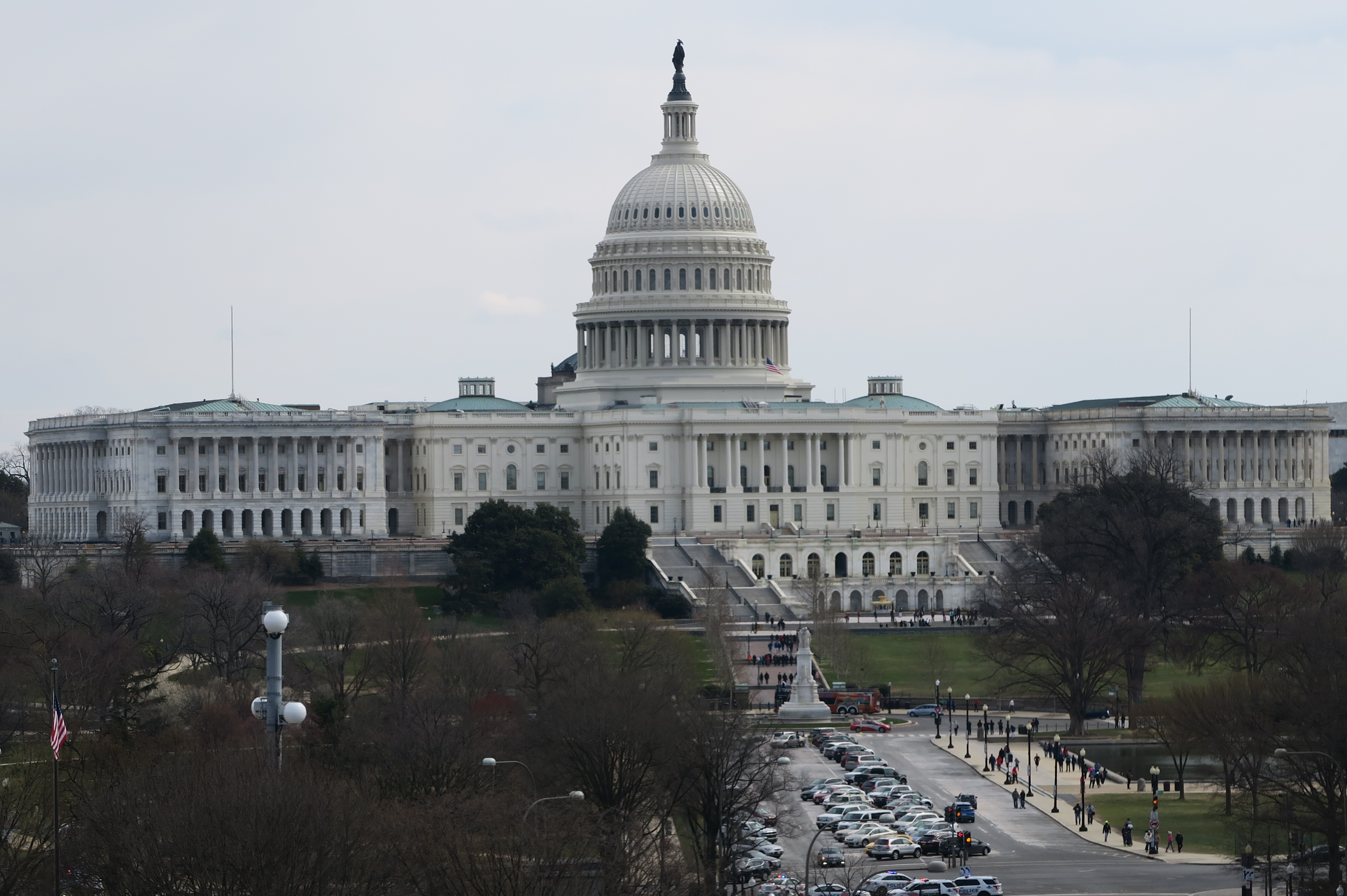
Archive photograph · 2018-03-25 · Washington, D.C.

Understand the story.
A new statement of priorities
Jeffries pledged to pursue Medicaid and Affordable Care Act changes, congressional tariff authority and limits on the Iran war. His office’s transcript records an agenda, not enacted measures or independently verified savings. [1]
Accountability is also on the ballot
Jeffries assigned planned oversight to House Judiciary and Oversight Committee Democrats. A promise to investigate identifies a priority; it establishes neither wrongdoing nor what an inquiry would conclude. [2]
A different direction from Johnson
In his office’s September 29 account, Johnson advocated continuing Republicans’ free-market and energy approach. That is earlier background for the comparison. We have not treated his claims of economic success as audited findings. [3]
Control gives power, with constraints
USAGov’s lawmaking guide explains why Senate contests matter alongside House races: both chambers must pass the same bill before presidential consideration. A veto and possible override add further decisions. Campaign priorities therefore describe choices to scrutinize, not guaranteed outcomes. [4]
How we know4 scoped claims · 3 source recordsView evidence
Each claim keeps its full assertion, date, source passage and limits. Source counts describe records, not independent corroboration.
1.Jeffries’s policy agendaAttributed
Jeffries’s office published an October 14 transcript in which he pledged to pursue reversal of Medicaid cuts, extension of Affordable Care Act tax credits, limits on the Iran war and recovery of congressional tariff authority.
- Scope
- United States, 2026 congressional election. Party leaders’ published remarks establish their stated agendas, not policy effects, electoral forecasts or proven wrongdoing. Ordinary federal lawmaking requires further collective decisions.
- Evidence passage
- First-100-days question from Luke Russert and Jeffries’s following answer.
- As of
- 2026-10-15
- Limit
- These are stated priorities; savings, legislative text and enactment are not established.
Retrieved 2026-10-15T14:18:46.645Z · House Democratic Leader Hakeem Jeffries
His office’s transcript of an MS NOW appearance; an interested account of stated priorities, not independent verification of attacks, costs or policy effects.
2.An oversight promiseAttributed
In the same transcript Jeffries said House Judiciary and Oversight Committee Democrats would lead oversight work.
- Scope
- United States, 2026 congressional election. Party leaders’ published remarks establish their stated agendas, not policy effects, electoral forecasts or proven wrongdoing. Ordinary federal lawmaking requires further collective decisions.
- Evidence passage
- Follow-up about special committees and Jeffries’s answer naming Judiciary and Oversight.
- As of
- 2026-10-15
- Limit
- A plan to investigate is not a finding of wrongdoing or a completed investigation.
Retrieved 2026-10-15T14:18:46.645Z · House Democratic Leader Hakeem Jeffries
His office’s transcript of an MS NOW appearance; an interested account of stated priorities, not independent verification of attacks, costs or policy effects.
3.Johnson’s preferred directionAttributed
In published September 29 CNBC remarks, Johnson said Republicans would continue the direction of their free-market and energy policies over the next two years.
- Scope
- United States, 2026 congressional election. Party leaders’ published remarks establish their stated agendas, not policy effects, electoral forecasts or proven wrongdoing. Ordinary federal lawmaking requires further collective decisions.
- Evidence passage
- Opening remarks and section on Republicans setting conditions for a thriving economy.
- As of
- 2026-10-15
- Limit
- Earlier interested-party background; the remarks do not prove the claimed economic results.
Retrieved 2026-10-15T14:18:46.697Z · Speaker Mike Johnson
His office’s earlier CNBC remarks; dated background describing his preferred direction, not a fresh October 15 announcement or a verified assessment of outcomes.
4.A House vote is one stepSupported
USAGov explains that both chambers must pass the same bill before it goes to the president, who can sign or veto it; Congress can override a veto in the circumstances described by the guide.
- Scope
- United States, 2026 congressional election. Party leaders’ published remarks establish their stated agendas, not policy effects, electoral forecasts or proven wrongdoing. Ordinary federal lawmaking requires further collective decisions.
- Evidence passage
- How a bill becomes a law, steps 4 through 7.
- As of
- 2026-10-15
- Limit
- Ordinary legislation; not a complete account of every congressional procedure or a forecast.
Retrieved 2026-10-15T14:20:07.510Z · USAGov / General Services Administration
Background guidance on the ordinary bill route and veto overrides; not evidence that any campaign promise has passed.
What remains open.
- No seat-count projection, race rating, win probability or current majority arithmetic is asserted.
- No detailed bills or independent cost estimates for these pledges were obtained; no new outreach or interviews were conducted.
- The party offices provide interested transcripts. Their allegations and economic performance claims are not adopted as established facts.
- AP and Congress.gov access gaps remain recorded; this story instead uses accessible original party transcripts and USAGov’s procedural guide.
Corrected transcripts, detailed proposals, comparable cost estimates or recorded legislative action would require a separately identified revision and renewed review.
THIS STORY IN TIME
Keep the dates with the story.
- Reported development
- Evidence as of
- First retained publication
- This version published
Publication times are Central. A development date and an evidence date can differ. Missing dates remain unrecorded.