← 2026-10-15 edition · Sourced reporting
Published Oct 15, 2026, 9:49 AM Central · This version Oct 15, 2026, 9:49 AM Central · As of 2026-10-15
Health-cost poll sets a test for North Carolina’s Senate promises
A new Axios/Ipsos poll finds 66% of U.S. adults favor willingness to spend more federal tax dollars to lower health-care costs. In North Carolina’s Senate race, Cooper specifies coverage and drug-cost proposals; Whatley’s captured issues page offers broad spending restraint without comparable health-policy detail. The poll predicts neither the race nor the savings. [1] [2] [3] [4] [5] [6]
Check all four official Senate candidates in the state roster; residential addresses are not needed to compare their proposals. →October 13 Axios/Ipsos national adult issue research, applied to a limited comparison of North Carolina’s two major-party U.S. Senate candidates. This is not a North Carolina race poll. Four candidates are on the official ballot; two candidates’ positions remain outside the captured comparison.
- 6 source records
- Ipsos / Axios
- Roy Cooper campaign
- Michael Whatley campaign
- +2 more
Still open: No North Carolina likely-voter poll, race forecast or candidate-specific health mandate can be inferred. All open questions ↓
Reporting question · As of 2026-10-15
The question: What can a new national health-cost poll tell voters comparing North Carolina’s Senate candidates?
October 13 Axios/Ipsos national adult issue research, applied to a limited comparison of North Carolina’s two major-party U.S. Senate candidates. This is not a North Carolina race poll. Four candidates are on the official ballot; two candidates’ positions remain outside the captured comparison.
Federal spending question
66% would allow more federal tax spending to lower costs; national adult issue opinion.
[1]Cooper’s proposals
ACA credits, Medicaid reversal, expanded Medicare negotiations and prescription caps; campaign claims.
[3]Whatley’s captured page
Trump agenda and spending restraint; no comparable detail on these four health-policy questions.
[4]Route to legislation
Both houses and the president, or a constitutional veto override; one senator cannot enact a plan.
[6]October 13 Axios/Ipsos national adult issue research, applied to a limited comparison of North Carolina’s two major-party U.S. Senate candidates. This is not a North Carolina race poll. Four candidates are on the official ballot; two candidates’ positions remain outside the captured comparison. These cards group documented distinctions; they do not measure a sequence, elapsed time or completed outcome.
Read the process as a table
| Component | Meaning | Evidence |
|---|---|---|
| Federal spending question | 66% would allow more federal tax spending to lower costs; national adult issue opinion. | [1] |
| Cooper’s proposals | ACA credits, Medicaid reversal, expanded Medicare negotiations and prescription caps; campaign claims. | [3] |
| Whatley’s captured page | Trump agenda and spending restraint; no comparable detail on these four health-policy questions. | [4] |
| Route to legislation | Both houses and the president, or a constitutional veto override; one senator cannot enact a plan. | [6] |
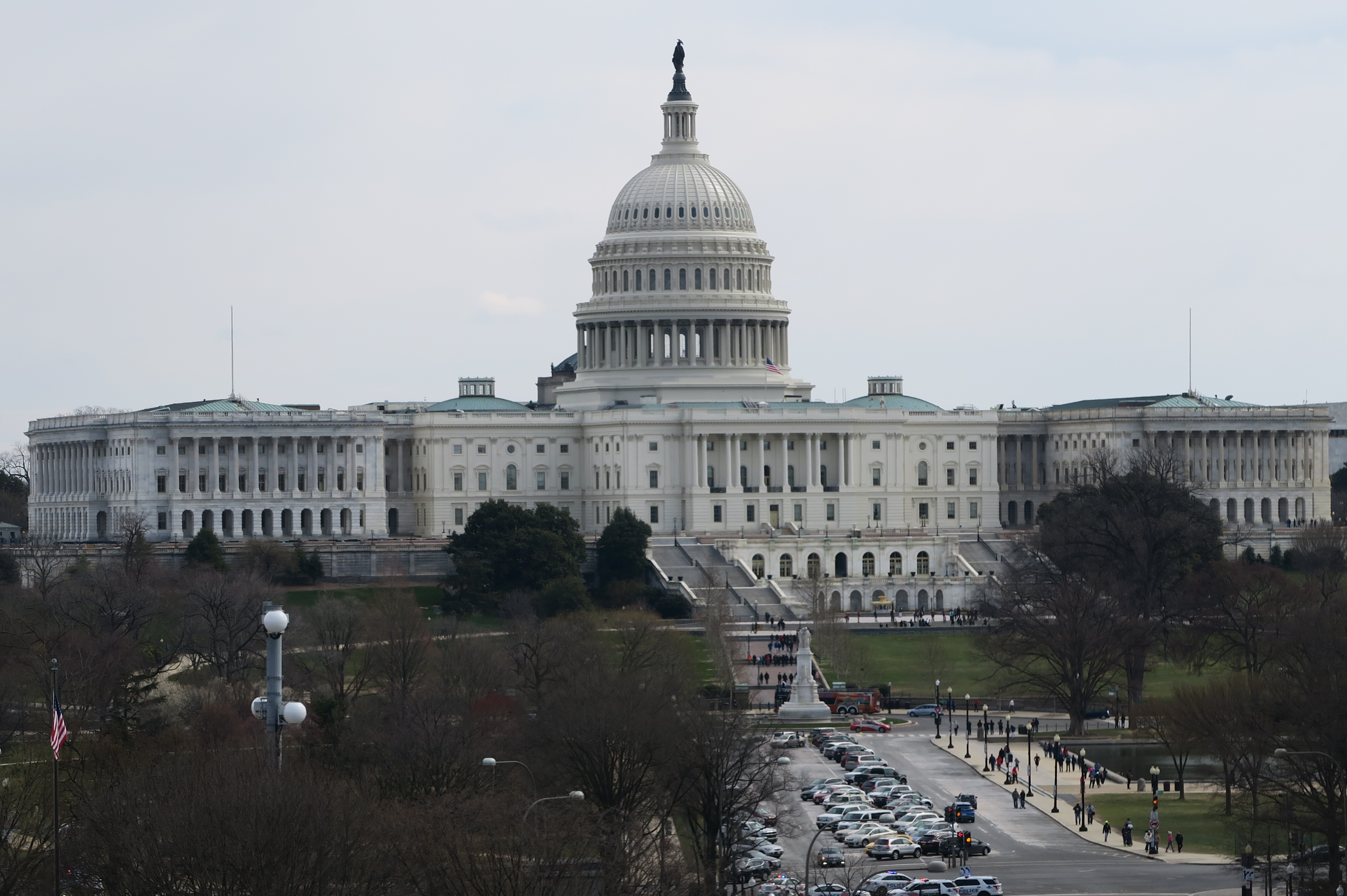
Archive photograph · 2018-03-25 · Washington, D.C.

Understand the story.
A national question, not a race lead
The September 25–28 survey asked which of two federal-spending views came closer to respondents’ views, even if neither was exactly right. Sixty-six percent chose willingness to spend more to lower costs; 11% chose no extra spending even if costs rise. Another 21% did not know and 2% skipped. [1]
Ask both candidates the same questions
On ACA subsidies, Medicaid, Medicare drug negotiation and prescription caps, Cooper’s September 5 page states proposals. Whatley’s captured issues page calls for Trump’s agenda and spending restraint without specifying answers to those four questions. That gap is not evidence that he opposes each proposal. We have not obtained costings or independently verified promised savings. [3] [4]
The federal power at stake
North Carolina’s winner joins a chamber that participates in federal lawmaking and financing. Changes still require a legislative route involving both houses and the president, or a veto override. A campaign promise alone changes no one’s coverage. [6]
Read the denominator—and the ballot
Ipsos used a weighted probability-based online panel of 1,122 adults, in English and Spanish, with a reported total-sample sampling margin of ±3.0 points at 95% confidence. This is national adult opinion, not likely-voter support in North Carolina. The ballot also lists Green candidate Michael Dublin and Libertarian Shannon W. Bray, whose comparable policy positions we have not obtained. [2] [5]
How we know6 scoped claims · 6 source recordsView evidence
Each claim keeps its full assertion, date, source passage and limits. Source counts describe records, not independent corroboration.
1.What the spending question askedSupported
In Wave 13, 66% chose the view that the federal government should be willing to spend more tax dollars to lower Americans’ health-care costs; 11% chose no additional spending even if costs rise, 21% did not know and 2% skipped.
- Scope
- October 13 Axios/Ipsos national adult issue research, applied to a limited comparison of North Carolina’s two major-party U.S. Senate candidates. This is not a North Carolina race poll. Four candidates are on the official ballot; two candidates’ positions remain outside the captured comparison.
- Evidence passage
- Question 81, Which of the following comes closer to your views, even if neither is exactly right? September 25–28, 2026 row. October 13 Ipsos release → Detailed Findings 1, federal-spending paragraph; exclude the older June section.
- As of
- 2026-10-15
- Limit
- National adult opinion on a forced-choice spending question, not a cost estimate, race poll or endorsement of a specific bill.
Retrieved 2026-10-15T13:45:15.800Z · Ipsos / Axios
Wave 13 questionnaire and methodology linked from the October 13 report; interviews September 25–28, 2026.
Retrieved 2026-10-15T13:45:15.618Z · Ipsos / Axios
Dated Ipsos release; latest October section only. Older dated waves farther down the same page are not current findings.
2.Who was surveyedSupported
Axios/Ipsos interviewed 1,122 U.S. adults aged 18 and older September 25–28 using the probability-based online KnowledgePanel. Ipsos reports a total-sample margin of sampling error of ±3.0 percentage points at 95% confidence, including a 1.06 design effect.
- Scope
- October 13 Axios/Ipsos national adult issue research, applied to a limited comparison of North Carolina’s two major-party U.S. Senate candidates. This is not a North Carolina race poll. Four candidates are on the official ballot; two candidates’ positions remain outside the captured comparison.
- Evidence passage
- Cover page and About the Study, final methodology pages: recruitment, weighting and margin of sampling error.
- As of
- 2026-10-15
- Limit
- English/Spanish; address-based recruitment, internet provision and demographic/political weighting. Subgroup errors are larger; sampling error excludes other possible errors. No likely-voter or North Carolina sample inference.
Retrieved 2026-10-15T13:45:15.800Z · Ipsos / Axios
Wave 13 questionnaire and methodology linked from the October 13 report; interviews September 25–28, 2026.
3.Cooper’s stated toolsAttributed
Cooper’s September 5 health-care page proposes reinstating ACA tax credits, reversing Medicaid cuts, broadening Medicare drug-price negotiations and capping annual prescription out-of-pocket costs.
- Scope
- October 13 Axios/Ipsos national adult issue research, applied to a limited comparison of North Carolina’s two major-party U.S. Senate candidates. This is not a North Carolina race poll. Four candidates are on the official ballot; two candidates’ positions remain outside the captured comparison.
- Evidence passage
- Making Health Care Affordable → opening paragraph and policy list; Last updated: 9/5/2026.
- As of
- 2026-10-15
- Limit
- Campaign proposals only. Claims about past impacts, savings and coverage are not independently verified here; no price or enactment guarantee.
Retrieved 2026-10-15T13:45:15.367Z · Roy Cooper campaign
Interested campaign policy page explicitly last updated September 5; dated background, not a new announcement.
4.Whatley’s detail gapAttributed
Whatley’s captured issues page endorses Trump’s agenda and restraining federal spending, but does not specify an ACA subsidy, Medicaid, Medicare negotiation or prescription-cost-cap proposal.
- Scope
- October 13 Axios/Ipsos national adult issue research, applied to a limited comparison of North Carolina’s two major-party U.S. Senate candidates. This is not a North Carolina race poll. Four candidates are on the official ballot; two candidates’ positions remain outside the captured comparison.
- Evidence passage
- Michael’s Plan for North Carolina → Enact the Trump Agenda and America First Economy; inspection of the full captured issues page.
- As of
- 2026-10-15
- Limit
- This is a bounded observation about one page, not proof of opposition to these policies or no position elsewhere. No campaign contact was authorized.
Retrieved 2026-10-15T13:45:15.839Z · Michael Whatley campaign
Interested campaign issues page; publication/update date not displayed. Absence of detail here does not establish absence of a position elsewhere.
5.Four candidates, limited comparisonSupported
The official North Carolina general-election roster lists Michael Dublin (GRE), Roy Cooper (DEM), Shannon W. Bray (LIB) and Michael Whatley (REP) for U.S. Senate.
- Scope
- October 13 Axios/Ipsos national adult issue research, applied to a limited comparison of North Carolina’s two major-party U.S. Senate candidates. This is not a North Carolina race poll. Four candidates are on the official ballot; two candidates’ positions remain outside the captured comparison.
- Evidence passage
- Candidate list grouped by contest → US SENATE, page 1; generation timestamp in roster footer.
- As of
- 2026-10-15
- Limit
- Only Cooper and Whatley campaign pages were captured for policy comparison. Dublin and Bray’s positions remain a coverage gap; no two-candidate ballot implication.
Retrieved 2026-10-15T13:45:15.746Z · North Carolina State Board of Elections
Official general-election candidate list, generated October 13; US SENATE rows on page 1. Residential addresses are private evidence and omitted from article.
6.Promises need a route to lawSupported
The Constitution gives Congress taxing and spending powers; a bill passed by both houses is presented to the president, with a two-thirds vote in each house required to override a veto. A senator cannot enact a health-care platform alone.
- Scope
- October 13 Axios/Ipsos national adult issue research, applied to a limited comparison of North Carolina’s two major-party U.S. Senate candidates. This is not a North Carolina race poll. Four candidates are on the official ballot; two candidates’ positions remain outside the captured comparison.
- Evidence passage
- Article I, sections 7 and 8, Senate-hosted Constitution.
- As of
- 2026-10-15
- Limit
- Constitutional baseline; not a prediction about a particular bill, budget score, procedural exception or majority.
Retrieved 2026-10-15T13:45:15.641Z · United States Senate
Senate-hosted Constitution; undated web reference to older constitutional text, used only for powers.
What remains open.
- No North Carolina likely-voter poll, race forecast or candidate-specific health mandate can be inferred.
- Comparable detailed Whatley health positions, Dublin and Bray positions, independent costings and implementation schedules are missing. No outreach was conducted.
- Older campaign pages provide dated context; only the October 13 poll is the fresh development. June findings lower on the Ipsos page are excluded.
Evidence that these adult issue responses are being misread as a candidate vote estimate. A new original record requires a separately identified revision and renewed source review.
THIS STORY IN TIME
Keep the dates with the story.
- Reported development
- Evidence as of
- First retained publication
- This version published
Publication times are Central. A development date and an evidence date can differ. Missing dates remain unrecorded.