← 2026-10-13 edition · Sourced reporting
Published Oct 13, 2026, 9:06 AM Central · This version Oct 13, 2026, 9:06 AM Central · As of 2026-10-13
Halley’s Comet has a gift for October. The Moon sets the terms.
The Orionids peak October 21–22. NASA’s advice this year is to try the hours before dawn after moonset: the bright Moon can hide the faint streaks. [1]
Use NASA’s October observing guide to plan your night; check local conditions before going. →NASA’s October 2026 skywatching guidance. Local weather, moonset and visibility depend on location; no live sighting or guaranteed number of meteors is asserted.
- 2 source records
- NASA / Jet Propulsion Laboratory
Still open: No location-specific cloud forecast, exact local moonset, access permission or expected meteor count is supplied. All open questions ↓
Reporting question · As of 2026-10-13
The question: When should I look for October’s Orionids, and why does moonlight change the plan?
NASA’s October 2026 skywatching guidance. Local weather, moonset and visibility depend on location; no live sighting or guaranteed number of meteors is asserted.
After moonset, before dawn
Use the darker part of the night, with a site away from artificial lights.
[1] [3]Give your eyes time
Let your eyes adapt and take in a broad sky. Orion is the apparent radiant, not a target to stare at.
[3]A dated observing plan, not measured sightings. Moonset, weather and access vary by location.
Read the process as a table
| Component | Meaning | Evidence |
|---|---|---|
| October 21–22 | The peak night. Bright moonlight is a viewing constraint this year. | [1] |
| After moonset, before dawn | Use the darker part of the night, with a site away from artificial lights. | [1] [3] |
| Give your eyes time | Let your eyes adapt and take in a broad sky. Orion is the apparent radiant, not a target to stare at. | [3] |
| October 27–28 | A second reason to look up: the Moon passes near the Pleiades in the evening sky. | [4] |
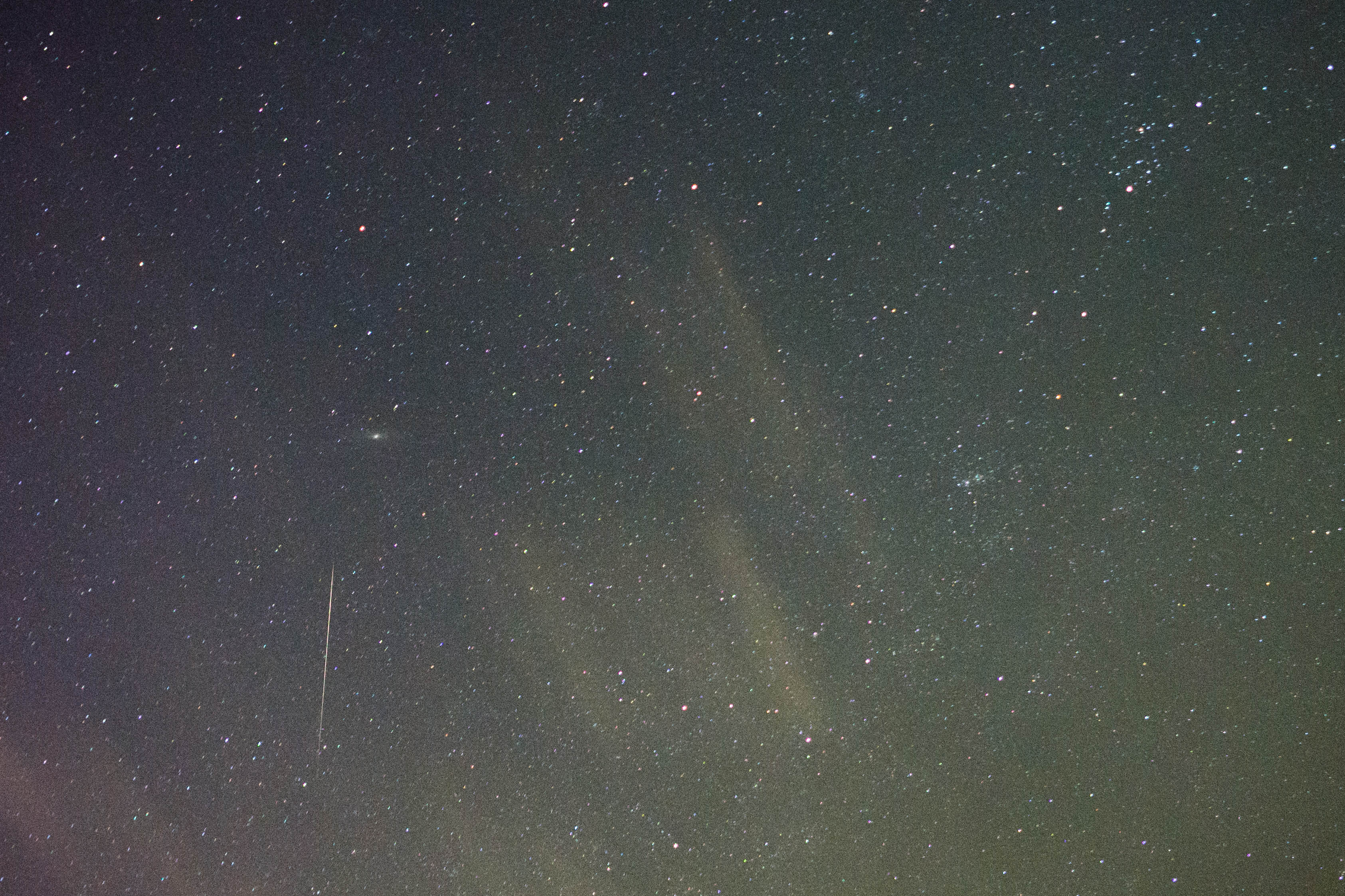
Archive photograph · 2020-10-21 · Location not supplied in retained metadata

Understand the story.
The show has a catch
A meteor shower on the calendar does not promise a sky full of streaks. The useful detail in NASA’s October guide is the viewing window: moonlight can overpower the faint ones, so the darker hours after moonset matter. [1]
An old comet, a brief encounter
You are not waiting for Halley’s Comet to arrive. Its debris is already along Earth’s route. When those small fragments encounter our atmosphere, they disintegrate into the streaks we call meteors. Orion gives the shower its name because the trails appear to radiate from that part of the sky. [2]
Make darkness part of the plan
NASA’s general viewing guidance is simple: get away from artificial lights, give your eyes time to adapt, and take in a broad sky. Looking only at Orion can make the trails seem shorter. The goal is a patient view of the sky, not a search for one fixed point. [3]
Keep a second date
If the meteor plan does not work for you, October offers another skywatching opportunity. On October 27–28, NASA’s guide places the Moon near the Pleiades. Look east in the evening. These are observing suggestions, not a forecast that your local sky will be clear. [4]
How we know4 scoped claims · 2 source recordsView evidence
Each claim keeps its full assertion, date, source passage and limits. Source counts describe records, not independent corroboration.
1.Claim 1Supported
NASA’s October guide places the Orionid peak on October 21–22 and recommends the hours before dawn after moonset because the bright Moon can obscure faint meteors.
- Scope
- NASA October 2026 guidance or general meteor mechanism, as specified.
- Evidence passage
- Skywatching Highlights and Orionid transcript paragraphs.
- As of
- 2026-10-13
- Limit
- Not a guarantee of viewing success or a local sky condition report.
Retrieved 2026-10-13T13:48:23.763Z · NASA / Jet Propulsion Laboratory
Same issuing agency. Observing conditions vary by location and date; no guaranteed meteor count.
2.Claim 2Supported
Orionid meteors come from debris left by Halley’s Comet. Earth passes through that material; the fragments disintegrate in the atmosphere. The constellation names the apparent radiant, not the origin of the debris.
- Scope
- NASA October 2026 guidance or general meteor mechanism, as specified.
- Evidence passage
- Where Do Meteors Come From?, The Comet and The Radiant sections.
- As of
- 2026-10-13
- Limit
- Not a guarantee of viewing success or a local sky condition report.
Retrieved 2026-10-13T13:48:23.828Z · NASA / Jet Propulsion Laboratory
Same issuing agency. Observing conditions vary by location and date; no guaranteed meteor count.
3.Claim 3Supported
NASA recommends a dark site away from artificial lights, viewing after midnight, giving eyes time to adapt, and taking in a broad area of sky rather than only looking directly at Orion.
- Scope
- NASA October 2026 guidance or general meteor mechanism, as specified.
- Evidence passage
- Viewing Tips and The Radiant sections.
- As of
- 2026-10-13
- Limit
- Not a guarantee of viewing success or a local sky condition report.
Retrieved 2026-10-13T13:48:23.828Z · NASA / Jet Propulsion Laboratory
Same issuing agency. Observing conditions vary by location and date; no guaranteed meteor count.
4.Claim 4Supported
NASA’s October guide places the Moon near the Pleiades on October 27–28 and suggests looking east in the evening.
- Scope
- NASA October 2026 guidance or general meteor mechanism, as specified.
- Evidence passage
- Moon/Pleiades transcript paragraphs.
- As of
- 2026-10-13
- Limit
- Not a guarantee of viewing success or a local sky condition report.
Retrieved 2026-10-13T13:48:23.763Z · NASA / Jet Propulsion Laboratory
Same issuing agency. Observing conditions vary by location and date; no guaranteed meteor count.
What remains open.
- No location-specific cloud forecast, exact local moonset, access permission or expected meteor count is supplied.
- These sources do not document an October 2026 meteor observation.
A correction to NASA’s dates or a local sky/weather forecast would change the observing plan; retain this guidance and append the changed version.
THIS STORY IN TIME
Keep the dates with the story.
- Reported development
- Not recorded
- Evidence as of
- First retained publication
- This version published
Publication times are Central. A development date and an evidence date can differ. Missing dates remain unrecorded.