← 2026-10-14 edition · Sourced reporting
Published Oct 14, 2026, 11:25 AM Central · This version Oct 14, 2026, 11:25 AM Central · As of 2026-10-14
Pay rose slightly. September’s prices rose faster.
BLS’s two releases today show average hourly pay rose 0.1% in September while consumer prices rose 0.6%. Inflation-adjusted average hourly earnings fell 0.5%. Gasoline drove more than half of the monthly price rise; groceries edged down. [6] [1] [2] [3]
Read BLS’s September real-earnings release in the Department of Labor PDF: compare average pay before and after inflation. National averages do not calculate your personal budget. →United States, September 2026 releases issued October 14. CPI-U measures consumer prices; real earnings concern average hourly earnings of all employees on private nonfarm payrolls, adjusted with CPI-U. Monthly changes are seasonally adjusted. These are national averages, not a household budget or an individual pay change.
- 2 source records
- U.S. Bureau of Labor Statistics
Still open: A worker’s pay history and household spending are not observed here. All open questions ↓
Reporting question · As of 2026-10-14
The question: Did September’s average hourly pay keep pace with prices?
United States, September 2026 releases issued October 14. CPI-U measures consumer prices; real earnings concern average hourly earnings of all employees on private nonfarm payrolls, adjusted with CPI-U. Monthly changes are seasonally adjusted. These are national averages, not a household budget or an individual pay change.
August to September 2026 · seasonally adjusted · percent change
Average hourly earnings of all employees on private nonfarm payrolls and CPI-U. Each change uses its own prior-month level as the denominator. These are growth rates, not comparable dollar levels or an individual household result. Inflation-adjusted pay uses a price-index ratio; rounded rates are not an exact subtraction identity.
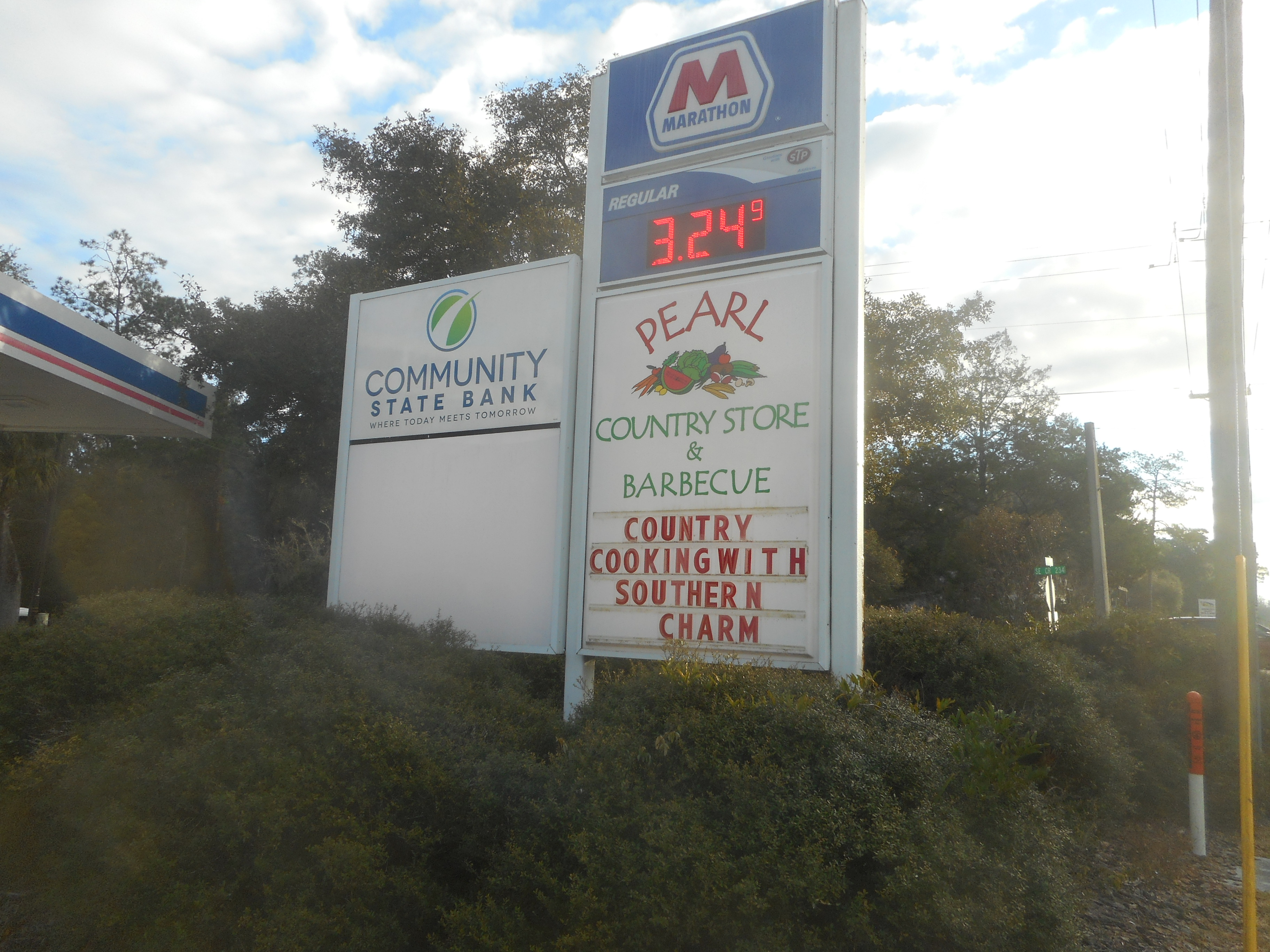
Archive photograph · 2022-12-29 · Micanopy, Florida

Understand the story.
A raise can still buy less
The real-earnings release adds the pay side of today’s inflation news. Average hourly earnings rose 0.1%, but prices rose 0.6%. BLS reports a 0.5% fall after inflation adjustment. That describes the national average, not every worker’s paycheck. [6]
The pump drove the price jump
Gasoline’s 9.1% monthly increase accounted for more than half of September’s all-items rise, BLS reports. Food-at-home prices edged down 0.1%, while shelter rose 0.4%. A household’s spending mix can differ from these national indexes. [1] [2] [3] [4]
Keep the month separate from the year
Consumer prices were 3.7% higher than a year earlier before seasonal adjustment. Real average hourly earnings were 0.7% lower over the year, seasonally adjusted. Those are different measures and periods from the monthly chart; neither forecasts your next raise or an interest-rate decision. [1] [7]
Read the adjustment before applying it
Use the BLS earnings release to see the pay and price measures behind the result. The averages do not say that every worker lost purchasing power. Changes in average pay can also reflect which workers are represented. Compare your own pay and spending separately. [6] [7]
How we know7 scoped claims · 2 source recordsView evidence
Each claim keeps its full assertion, date, source passage and limits. Source counts describe records, not independent corroboration.
1.Inflation increasedSupported
BLS reports CPI-U rose 0.6% in September, seasonally adjusted, after 0.4% in August. The unadjusted twelve-month increase was 3.7%, compared with August’s 3.4%.
- Scope
- United States, September 2026 releases issued October 14. CPI-U measures consumer prices; real earnings concern average hourly earnings of all employees on private nonfarm payrolls, adjusted with CPI-U. Monthly changes are seasonally adjusted. These are national averages, not a household budget or an individual pay change.
- Evidence passage
- October 14 CPI summary, opening paragraph and twelve-month paragraph; table A, All items.
- As of
- 2026-10-14
- Limit
- Monthly and twelve-month changes have different periods and seasonal treatments.
Retrieved 2026-10-14T15:23:25.218Z · U.S. Bureau of Labor Statistics
United States, September 2026 releases issued October 14. CPI-U measures consumer prices; real earnings concern average hourly earnings of all employees on private nonfarm payrolls, adjusted with CPI-U. Monthly changes are seasonally adjusted. These are national averages, not a household budget or an individual pay change.
2.Gasoline drove over half the monthly riseSupported
BLS reports gasoline prices rose 9.1% in September and accounted for more than half of the monthly all-items increase.
- Scope
- United States, September 2026 releases issued October 14. CPI-U measures consumer prices; real earnings concern average hourly earnings of all employees on private nonfarm payrolls, adjusted with CPI-U. Monthly changes are seasonally adjusted. These are national averages, not a household budget or an individual pay change.
- Evidence passage
- October 14 CPI summary, second paragraph; table A, Gasoline (all types).
- As of
- 2026-10-14
- Limit
- A national category index, not the price posted at a particular station.
Retrieved 2026-10-14T15:23:25.218Z · U.S. Bureau of Labor Statistics
United States, September 2026 releases issued October 14. CPI-U measures consumer prices; real earnings concern average hourly earnings of all employees on private nonfarm payrolls, adjusted with CPI-U. Monthly changes are seasonally adjusted. These are national averages, not a household budget or an individual pay change.
3.Groceries edged downSupported
BLS reports the food-at-home index fell 0.1% in September, while the overall food index was unchanged.
- Scope
- United States, September 2026 releases issued October 14. CPI-U measures consumer prices; real earnings concern average hourly earnings of all employees on private nonfarm payrolls, adjusted with CPI-U. Monthly changes are seasonally adjusted. These are national averages, not a household budget or an individual pay change.
- Evidence passage
- October 14 CPI summary, second paragraph; Food section; table A, Food at home.
- As of
- 2026-10-14
- Limit
- An average across the category; individual products and households can differ.
Retrieved 2026-10-14T15:23:25.218Z · U.S. Bureau of Labor Statistics
United States, September 2026 releases issued October 14. CPI-U measures consumer prices; real earnings concern average hourly earnings of all employees on private nonfarm payrolls, adjusted with CPI-U. Monthly changes are seasonally adjusted. These are national averages, not a household budget or an individual pay change.
4.Shelter roseSupported
BLS reports the shelter index rose 0.4% in September after rising 0.3% in August.
- Scope
- United States, September 2026 releases issued October 14. CPI-U measures consumer prices; real earnings concern average hourly earnings of all employees on private nonfarm payrolls, adjusted with CPI-U. Monthly changes are seasonally adjusted. These are national averages, not a household budget or an individual pay change.
- Evidence passage
- October 14 CPI summary, second paragraph; table A, Shelter.
- As of
- 2026-10-14
- Limit
- An aggregate index, not the rent change faced by every tenant.
Retrieved 2026-10-14T15:23:25.218Z · U.S. Bureau of Labor Statistics
United States, September 2026 releases issued October 14. CPI-U measures consumer prices; real earnings concern average hourly earnings of all employees on private nonfarm payrolls, adjusted with CPI-U. Monthly changes are seasonally adjusted. These are national averages, not a household budget or an individual pay change.
5.The increase extended beyond energySupported
BLS reports the index excluding food and energy rose 0.3% in September and 2.6% over twelve months.
- Scope
- United States, September 2026 releases issued October 14. CPI-U measures consumer prices; real earnings concern average hourly earnings of all employees on private nonfarm payrolls, adjusted with CPI-U. Monthly changes are seasonally adjusted. These are national averages, not a household budget or an individual pay change.
- Evidence passage
- October 14 CPI summary, third and fourth paragraphs; table A, All items less food and energy.
- As of
- 2026-10-14
- Limit
- Excluding volatile categories does not remove them from household spending.
Retrieved 2026-10-14T15:23:25.218Z · U.S. Bureau of Labor Statistics
United States, September 2026 releases issued October 14. CPI-U measures consumer prices; real earnings concern average hourly earnings of all employees on private nonfarm payrolls, adjusted with CPI-U. Monthly changes are seasonally adjusted. These are national averages, not a household budget or an individual pay change.
6.Hourly purchasing power fellSupported
BLS reports real average hourly earnings for all employees decreased 0.5% from August to September, seasonally adjusted, as nominal average hourly earnings rose 0.1% and CPI-U rose 0.6%.
- Scope
- United States, September 2026 releases issued October 14. CPI-U measures consumer prices; real earnings concern average hourly earnings of all employees on private nonfarm payrolls, adjusted with CPI-U. Monthly changes are seasonally adjusted. These are national averages, not a household budget or an individual pay change.
- Evidence passage
- Real Earnings – September 2026; All employees, first paragraph.
- As of
- 2026-10-14
- Limit
- A national average for employees on private nonfarm payrolls, not a measure of any individual worker. Rounded growth rates should not be treated as an exact subtraction identity.
Retrieved 2026-10-14T15:23:24.994Z · U.S. Bureau of Labor Statistics
United States, September 2026 releases issued October 14. CPI-U measures consumer prices; real earnings concern average hourly earnings of all employees on private nonfarm payrolls, adjusted with CPI-U. Monthly changes are seasonally adjusted. These are national averages, not a household budget or an individual pay change.
7.The year comparison also fellSupported
BLS reports real average hourly earnings decreased 0.7% from September 2025 to September 2026, seasonally adjusted.
- Scope
- United States, September 2026 releases issued October 14. CPI-U measures consumer prices; real earnings concern average hourly earnings of all employees on private nonfarm payrolls, adjusted with CPI-U. Monthly changes are seasonally adjusted. These are national averages, not a household budget or an individual pay change.
- Evidence passage
- Real Earnings – September 2026; All employees, third paragraph.
- As of
- 2026-10-14
- Limit
- This twelve-month measure has a different period from the monthly graphic; average earnings can also reflect shifts in the composition of employees.
Retrieved 2026-10-14T15:23:24.994Z · U.S. Bureau of Labor Statistics
United States, September 2026 releases issued October 14. CPI-U measures consumer prices; real earnings concern average hourly earnings of all employees on private nonfarm payrolls, adjusted with CPI-U. Monthly changes are seasonally adjusted. These are national averages, not a household budget or an individual pay change.
What remains open.
- A worker’s pay history and household spending are not observed here.
- Average earnings can change when the mix of jobs or workers changes; these releases do not isolate every cause of nominal pay growth.
- No numerical CPI correction was found: its archived bytes match the earlier public receipt. The materially added record is the separate October 14 Real Earnings release.
- The live BLS help endpoint rejected the independent unauthenticated audit fetch with HTTP 403. The Department of Labor PDF of release USDL-26-1575 was fetched, its visible October 14 date and relevant figures read, and it is the verified useful help destination. Claim support remains on the successful original BLS adapter capture.
A new official record, correction or material change would trigger a new captured revision and reconciliation of the affected claims.
THIS STORY IN TIME
Keep the dates with the story.
- Reported development
- Evidence as of
- First retained publication
- This version published
Publication times are Central. A development date and an evidence date can differ. Missing dates remain unrecorded.